
Office Address
123/A, Miranda City Likaoli Prikano, Dope
Phone Number
+0989 7876 9865 9
+(090) 8765 86543 85
Email Address
info@example.com
example.mail@hum.com


123/A, Miranda City Likaoli Prikano, Dope
+0989 7876 9865 9
+(090) 8765 86543 85
info@example.com
example.mail@hum.com
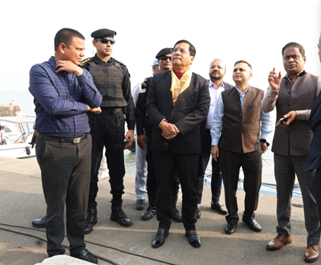
The review outlined
a long-term development roadmap aimed at positioning Mumbai as a leading
maritime and waterfront destination by 2047. The transformation strategy is
structured around two parallel growth pathways — strengthening Mumbai Port’s
core cargo operations and repurposing underutilised port land for urban,
tourism and business infrastructure.
“Under the dynamic leadership of our Prime Minister Shri Narendra Modi
ji,
India is moving decisively towards becoming one of the world’s foremost
maritime nations. The ₹22,672-crore transformation of Mumbai’s Eastern
Waterfront is central to that journey — strengthening maritime self-reliance,
expanding trade and tourism, and creating globally benchmarked waterfront
infrastructure. This initiative aligns with the goals of Viksit Bharat and Atmanirbhar
Bharat while establishing Mumbai as a global maritime and blue economy hub,”
Sarbananda Sonowal said.
Large stretches of
underutilised land along the Eastern Waterfront are being systematically
redeveloped to support cruise tourism, maritime business, skilling and blue
economy activities. The redevelopment programme is aligned with the Maritime
Amrit Kaal Vision 2047, the Cruise Bharat Mission and NITI Aayog’s Mumbai
Metropolitan Region Growth Hub Plan, positioning the waterfront as a multi-use
economic and public space.
Mumbai Port is targeting a cargo handling capacity of
150 million tonnes per annum by 2047, driven primarily by offshore liquid bulk
cargo such as crude oil, petroleum products, LNG and chemicals at Jawahar Dweep
and Pirpau. Key infrastructure projects include reclamation and shore
protection works, development of a 22 MTPA sixth oil berth at Jawahar Dweep,
and new anchorage facilities in the outer harbour to support solid bulk
transshipment.
“Mumbai has always been India’s maritime gateway to
the world. PM Modi ji’s call for revival, rejuvenation and revamp of our
maritime prowess lies central towards our journey to become Atmanirbhar Bharat.
Mumbai’s revival as a modern, efficient and people-centric port city will play
a defining role in powering India’s ascendancy as a global maritime power,
capable of shaping international trade, logistics and maritime services in the
decades ahead,” Union Minister Sarbananda Sonowal added.
A key anchor project
is the Viksit Bharat Mumbai Marina, envisaged as India’s first and largest
world-class marina, with an investment of ₹887 crore through a hybrid EPC–PPP
model…As part of modernising traditional
maritime livelihoods, a new fish jetty at Mallet Bunder is being developed at a
cost of ₹132 crore with support from the Pradhan Mantri Matsya Sampada Yojana.
The facility will increase fishing trawler capacity from about 300 to over
1,200 vessels while segregating fishery operations from passenger movement to improve
safety and efficiency. The surrounding waterfront area will be activated
through themed streets, open-air dining zones and public spaces, contributing
to a 3.5-kilometre continuous waterfront promenade for citizens and tourists.
Institutional and governance infrastructure is also
being upgraded as part of the transformation…. Mumbai Port Authority is also supporting key state-led infrastructure
projects such as Metro Line 11, the Orange Gate–Marine Drive Tunnel Project and
the Radio Club Jetty, ensuring seamless integration of port-led development
with Mumbai’s wider urban mobility network. The integrated portfolio of
projects will generate employment for about 5.5 lakh people, create more than
500 hectares of built-up maritime and blue economy space, and attract over 25
million annual footfalls by 2047.
Union Minister Sarbananda Sonowal said the
transformation of Mumbai’s Eastern Waterfront reflects the visionary leadership
of Prime Minister Narendra Modi in repositioning India as a leading maritime nation.