



Office Address
123/A, Miranda City Likaoli Prikano, Dope
Phone Number
+0989 7876 9865 9
+(090) 8765 86543 85
Email Address
info@example.com
example.mail@hum.com


123/A, Miranda City Likaoli Prikano, Dope
+0989 7876 9865 9
+(090) 8765 86543 85
info@example.com
example.mail@hum.com
In a
wide-ranging interview on the sidelines of an energy conference in Paris,
Mathios Rigas, who founded Energean in 2007, said the company had carved out a
niche as an efficient, nimble deepwater operator, drilling at lower cost than
the majors in jurisdictions within three hours by time zone from Athens.
Currently producing 150,000-160,000 barrels of oil equivalent per day across
its portfolio, much of it in Israel’s Karish gas development — which supplies
the domestic market and in which it holds a 100% stake — Energean hopes to grow
in the coming years both organically and through mergers and acquisitions,
Rigas said. “I would like Energean to be
a company that has three production legs. One in Israel, one in Egypt, one in
West Africa,” he said. “That is when I will feel comfortable that we have a
stable production base that can withstand any challenge.” He added: “I want these three production
legs to have equal weighting. That gives you a target of where we’d like to be
over the next decade, which is at least 300,000 boe/d of production.”
Energean pumped 113,000 boe/d in Israel in 2025 and
29,000 boe/d in Egypt, with the remaining 12,000 boe/d coming from its European
portfolio across Italy, Greece, the UK and Croatia.
Middle East impact
Energean has
been directly affected by the Middle East war, with its Karish gas field shut
down for six weeks, the second closure since 2003, costing the company $10
million a month. The field is now back online at full capacity. “Does it hurt? Yes it does. Is it a
financial disaster? No it’s not,” he said. Nor is the shutdown making Energean
reconsider its investments in Israel.
“It’s a very young field, with a 19-year reserve life and a very long
way to go,” Rigas said, adding that Israel is the “bedrock” of its business.
“We are very happy to operate in Israel. Yes, there are difficulties, but there
are no easy places to do business on this planet.” Energean is interested in participating in
Israel’s next bid round, Rigas added. “Israel is an OECD country with a lot of
liquidity, a lot of funding, high credit quality offtakers in the middle of the
East Med with a lot of neighbors that need gas.” On the war’s macroeconomic impact, Rigas
said stability was preferable to high prices, with recent volatility posing a
challenge to both the industry and consumers.
Dated Brent soared beyond $144/b as a result of the
war, and was last assessed by Platts at $116.42/b April 28.
The fact that the markets quickly adjusted showed that
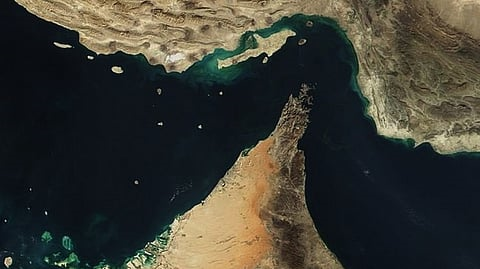
the closure of the Strait of Hormuz “was not the worst-case scenario,” Rigas
said.
“I don’t see oil prices going back down to $60, I
think there is going to be a new base,” he added. “But I don’t see it staying
above $100 because that’s not sustainable for the consumer.”
Elsewhere in the East Med, Energean is looking to grow
in Egypt, Rigas said, starting with two new wells in June and July that can be
tied back to existing infrastructure.
Last year, US private equity company Carlyle offered
to buy Energean’s international portfolio, including in Egypt, but the deal
fell through. The assets were never put up for sale, Rigas said.
West Africa push
Rigas was speaking after making Energean’s first foray
into West Africa, through a deal for Chevron’s stakes in Blocks 14 and 14K off
Angola. The deal, which adds some 13,000 b/d of operated crude production, is
expected to close this year.
The CEO said the transaction marks a “natural
transition” from a major to a nimbler operator “that can give to the field the
love and affection it needs to extend its life, but most importantly to
increase the production”.
Angola is a “very good entry point” for West Africa,
Rigas said, which will act as a springboard for further investment across the
region. “We are looking at a number of opportunities all over West Africa,
starting from Morocco, where we drilled and didn’t have [the] success we
wanted, all the way to South Africa.”
At the Paris conference, he met representatives from
the Democratic Republic of Congo, Sierra Leone, Gabon and Guinea, all hunting
for upstream investment.
Rigas said he was unfazed by what some perceive as a
rising tide of resource nationalism across the continent, with governments from
Gabon to Senegal looking to take control of their hydrocarbons sectors.
“I do see the signs,” Rigas said. “It is only natural
because of what has [been] happening in West Africa from all Western oil and
gas companies.”
“When you have energy poverty [and] at the same time
you have energy exports, there is something that has gone wrong,” he continued.
“It is the industry’s fault that [it] has not allowed local companies,
governments to enjoy the benefits of the natural resources the countries have.
That has led them to be more nationalistic.”
The trick is to build domestic supply into oil and gas
projects, while exporting barrels to fund them, he said.
European plans
Closer to
home, Energean recently chartered a rig to drill Greece’s first ever deepwater
exploration well — the first offshore wildcat in 40 years — in February 2027.
Energean holds a 40% stake in Block 2 alongside US energy group ExxonMobil and
will operate through the exploration phase.
Rigas said it reflected changing attitudes in Europe. “When this [Greek]
government was elected seven years ago, they were totally focused on the
transition to a greener economy,” he said. “I think they, like many others,
have realized the importance of energy security and affordable energy”
following the Ukraine and Iran wars.
Rigas said Energean would explore for both oil and gas and has a
9.5-trillion-cubic-feet gas prospect on the block with a 16% chance of success.
It also hopes to extend the block into Italian waters. “We have applied to the
Italian authorities to take the license on the other side, he said, adding that
it is not affected by Rome’s ban on oil exploration close to shore.
“I hope they move fast,” he said. “It is very
bureaucratic.”