




Office Address
123/A, Miranda City Likaoli Prikano, Dope
Phone Number
+0989 7876 9865 9
+(090) 8765 86543 85
Email Address
info@example.com
example.mail@hum.com


123/A, Miranda City Likaoli Prikano, Dope
+0989 7876 9865 9
+(090) 8765 86543 85
info@example.com
example.mail@hum.com
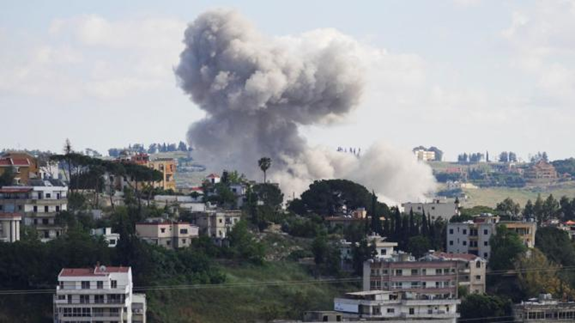
The United States military carried out "self-defence strikes"
targeting Iranian missile launch sites and boats near the Strait of Hormuz amid
an ongoing ceasefire between the two countries, CNN reported,
citing US Central Command (CENTCOM)."US forces conducted self-defence
strikes in southern Iran today to protect our troops from threats posed by
Iranian forces," CENTCOM spokesman Timothy Hawkins told CNN in
a statement when asked about reports of explosions near the strategic waterway.
He said the targets included missile launch sites and Iranian boats attempting
to deploy mines.
"US Central Command continues to defend our
forces while using restraint during the ongoing ceasefire," Hawkins
told CNN.US and Iranian forces have previously exchanged fire
during the ceasefire period.In early May, US forces had struck Iranian military
facilities allegedly involved in "unprovoked" missile, drone and
small boat attacks on American warships transiting the Strait of Hormuz.
This development comes hours after the US made
headway in the ceasefire negotiations with President Donald Trump stating that
Iran's enriched uranium will be "turned over" to the US to be
destroyed or will be destroyed at an acceptable location.
This also confirms the New York Times report
that Iran has agreed in principle to give up its stockpile of highly enriched
uranium as part of an emerging, US-led framework aimed at halting regional conflict[G1] . This also resolves the key difference between the
two countries, as CNN had earlier reported that the
disagreements over "language on Iran's nuclear program and the lifting of
sanctions" have slowed the finalisation of a broader understanding to
finalise the deal between Tehran and Washington.
Earlier, Trump had asserted that any forthcoming
accord with Tehran would strictly manifest as a "great and
meaningful" deal, or the administration would walk away entirely, as diplomatic
talks aimed at officially concluding the conflict continue to stretch out.Iran
had signalled that the parties have arrived at a conclusion over a large number
of topics, but pointed to the apprehensions over Washington's frequent changes
in positions, complicating the negotiations.Esmaeil Baqaei, Iranian Foreign Ministry spokesperson, said, "It
is correct that we have reached conclusions on a large portion of the
discussion topics, but to say that this means the signing of an imminent
agreement is something no one can claim. The frequent changes in the positions
of American officials complicate every negotiation".