


Office Address
123/A, Miranda City Likaoli Prikano, Dope
Phone Number
+0989 7876 9865 9
+(090) 8765 86543 85
Email Address
info@example.com
example.mail@hum.com


123/A, Miranda City Likaoli Prikano, Dope
+0989 7876 9865 9
+(090) 8765 86543 85
info@example.com
example.mail@hum.com
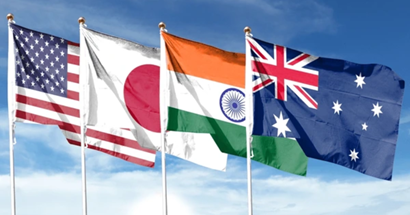
The new measures were unveiled
following a meeting of the Quad foreign ministers in New Delhi, chaired by
External Affairs Minister S. Jaishankar and attended by US Secretary of State
Marco Rubio, Australian Foreign Minister Penny Wong, and Japanese Foreign
Minister Toshimitsu Motegi. In a
media statement issued after the deliberations, Jaishankar announced a critical
minerals framework and an Indo-Pacific energy security initiative within the broader
Quad agenda to address the region’s major challenges. “Much of the discussions and indeed the
bilateral exchanges were devoted to the current state of the world,” Jaishankar
stated at the conclusion of the meeting.
The
foreign ministers of the four Quad nations convened in the national capital for
their third meeting since September 2024, with the economic fallout of the West
Asia crisis, Indo-Pacific security, and critical minerals cooperation
dominating a packed agenda at a moment of considerable strain for the grouping.
Jaishankar noted that the
focus of deliberations centered on issues relevant to the Indo-Pacific region.
“Because we are four maritime democracies located at different ends of the
Indo-Pacific, the exchange of perspectives was an exercise of considerable
value,” he said. “We spent some time
on the question of safe and unimpeded maritime commerce and reaffirmed the
significance of scrupulously observing international law,” the minister added.
Jaishankar
emphasized that a free and open Indo-Pacific has many dimensions and facets,
and the Quad meeting took stock of progress across multiple areas. “We believe strongly that economic
resilience should be promoted and supply chains strengthened,” he noted, adding
that the deliberations also touched on current energy and fertilizer
availability, as well as critical minerals.
“In the coming days, whether it
is economic activity, energy trade or maritime commerce, the Indo-Pacific will
become even more important to the world. The responsibilities of the Quad will
grow commensurately, and we must prepare for that,” Jaishankar stated.
US
Secretary of State Marco Rubio announced in his media statement that the Quad
meeting decided to launch an Indo-Pacific Maritime Surveillance Cooperation
Initiative that will leverage each country’s maritime surveillance capabilities
in the Indo-Pacific.
Rubio also announced the
expansion of the Indo-Pacific Maritime Domain Awareness Initiative among the
Quad nations.
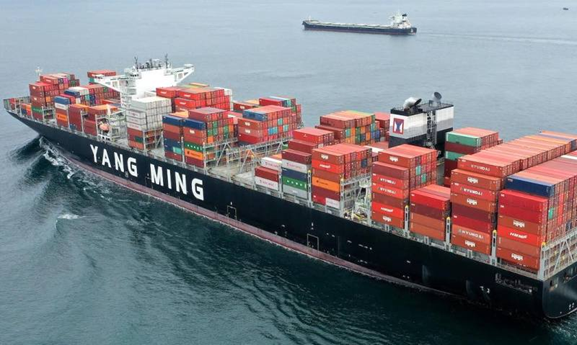
“The reason why maritime security
is so important, beyond the fact that current events remind us of what can
happen when maritime security is impeded, is the fact that 60 percent of global
maritime trade passes through the Indo-Pacific,” Rubio said. He argued that it
represents a vital national interest not only to the four Quad nations but also
to countless countries around the world.
The US Secretary of State
revealed that the Quad has decided to roll out a new initiative to boost port
infrastructure in the Pacific Islands.
“The second initiative: we’re
going to be partnering on issues of port infrastructure, in response to
insufficient port capacities in the Pacific Islands,” he said. “We’re announcing plans to work with Fiji
to advance that country’s port infrastructure. It’ll be the first time that the
Quad partners work together on a port infrastructure project,” Rubio added.
Australian
Foreign Minister Penny Wong said the Quad recognized efforts towards a
diplomatic resolution to ensure freedom of navigation in the Strait of Hormuz.
“We
recognized the importance of maintaining the principle of freedom of navigation
and our opposition to any tolling proposition,” she said, referring to Iran’s
plan to demand fees for transiting the strait. Wong
also stated that the Quad is working together to strengthen cooperation against
scam centers, particularly in Southeast Asia. The Australian foreign minister
said the Quad will initially coordinate maritime surveillance efforts in the
Indian Ocean. Counter-terrorism also
featured prominently in the talks, the external affairs minister confirmed.
“There must be zero tolerance for terrorism, and nations subject to terrorist
attacks have the right to defend themselves,” he said.
While
Quad ministers were meeting in India, China reiterated its stance on the
Australia-India-Japan-US grouping on Tuesday, saying that cooperation among
countries should contribute to regional peace, stability, and prosperity and
should not target any third party.
“We
also do not support the formation of exclusive cliques or bloc confrontation.
No cooperation should undermine mutual trust and cooperation among regional
countries,” China’s foreign ministry spokesperson Mao Ning told a daily press
conference.
The Quadrilateral Security
Dialogue, or the Quad, is a grouping of Australia, India, Japan, and the United
States maintained through talks among its members. The dialogue is widely
perceived as a diplomatic arrangement responding to increased Chinese economic
and political power. The Quad
grouping was initiated in 2007 by the then Japanese Prime Minister Shinzo Abe,
with the support of Australian Prime Minister John Howard, India’s then Prime
Minister Manmohan Singh, and US Vice President Dick Cheney.