India’s Ship Recycling Industry Gains Momentum as Hong Kong Convention Compliance Drives Growth
According to UNCTAD
data, India recycled 2.99 million gross
tonnes (GT) of ships in 2025, marking a 60% increase from 1.86
million GT in 2024. The sharp rise reflects growing confidence in
India’s recycling capabilities as yards upgrade their facilities to meet
international environmental and safety standards. The industry’s transformation has been
driven by significant investments in compliance with the Hong Kong Convention,
which establishes global benchmarks for safe and environmentally sound ship
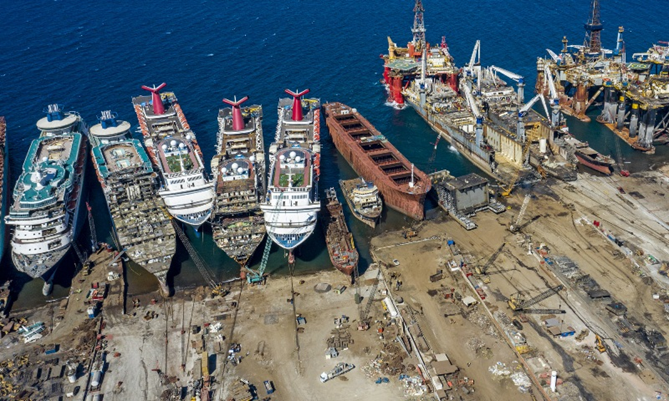
recycling. At Alang, Gujarat,
the world’s largest ship recycling cluster, 115 of the 130 operational recycling yards have already achieved
HKC compliance. According to Anand
Hiremath, Chief Sustainability Officer at GMS, Dubai, each yard has
invested between ₹3 crore and ₹6 crore
to upgrade infrastructure and processes. This translates into an estimated ₹350–700 crore in cumulative
investments across the industry.
Industry stakeholders believe India is now well positioned to move
beyond being the world’s largest ship recycling destination by volume. With
modernised facilities and internationally recognised environmental standards,
the country has the opportunity to emerge as a global hub for high-value, environmentally compliant and
sustainable ship recycling. The continued adoption of HKC standards is expected to
attract more quality tonnage from global shipowners seeking responsible
end-of-life vessel recycling, further strengthening India’s role in the global
maritime circular economy.
Related News