Five seafarers killed as Russia and Ukraine trade Black Sea blows
The Togo-flagged general cargoship was discharging mineral fertilisers
when the drone hit its superstructure, sparking a fire, according to Oleksii
Kuleba, Ukraine’s deputy prime minister in charge of restoration. “Russia struck a civilian merchant vessel
flying the flag of Togo during the unloading of mineral fertilisers. The hit to
the ship’s superstructure caused a fire,” Kuleba said. Oleh Kiper, head of the Odesa regional
military administration, confirmed last night that the toll had climbed to five
dead and 12 injured, all of them crewmembers. Seven remain in hospital in a
moderate condition, while five others were treated as outpatients. The Ukrainian Sea Ports Authority said port infrastructure and other
civilian facilities were also damaged in the raid, the latest in a near-nightly
barrage against Ukraine’s seaports. Two people were killed when Russian drones
hit port facilities in the Odesa region on July 11. Chornomorsk,
just down the coast, took the brunt of massed strikes over the weekend. Kernel,
Ukraine’s largest producer and exporter of sunflower oil, suspended operations
at its export terminal in the port after what it described as heavy hits on its
assets. Around 45,000 tonnes of
wheat and 9,000 tonnes of sunflower oil have been blocked, spilled or degraded. The bombardment continued overnight into
this morning, with Russian drones again hitting civilian and industrial sites
in the Odesa region, setting sunflower oil tanks ablaze at one enterprise and
wrecking a truck depot at another. No casualties were reported. Ukraine’s air
force said it intercepted more than 100 drones and five ballistic missiles
overnight. Kyiv has been returning fire across the Black Sea. Drones struck the
Afipsky refinery in Russia’s Krasnodar region overnight, sparking a fire near
its tank farm, while Gazprom Neftekhim Salavat in Bashkortostan, one of
Russia’s largest refining and petrochemical complexes, was also hit. An oil
depot in the Stavropol region was set alight a night earlier, and Bloomberg
reported this week that Ukraine’s long-range drone campaign has driven Russian
oil refining to a 21-year low.
In occupied Crimea, meanwhile, the entire city of Sevastopol, home to
what remains of Russia’s Black Sea Fleet, was blacked out on Sunday evening,
while the Dzhankoi district has now been without power for more than a week. The
mounting toll on merchant shipping drew a rebuke from International Maritime
Organization secretary-general Arsenio Dominguez, who told the body’s council
this week: “I deplore the series of attacks over the past week against civilian
merchant ships operating in the Sea of Azov and the Black Sea.” Dominguez
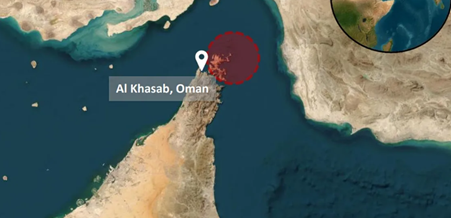
warned that while international attention has fixed on the Strait of Hormuz
following recent attacks on shipping there, seafarers elsewhere continue to
face serious threats, with such acts endangering crews, disrupting supply
chains and undermining the principles on which international shipping depends. “Seafarers
should never become casualties of conflicts to which they are not a party,” he
said.

Related News