



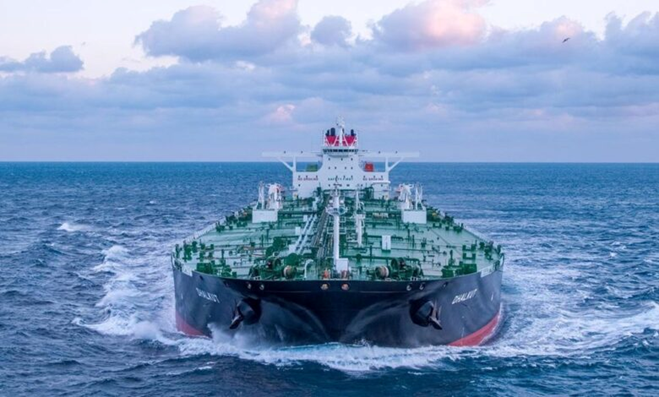
VLCC market enters ‘stop the press’ territory
“We’re in ‘stop the press’ territory now with VLCC rates galloping in
all areas in tandem with the Suez- and Aframax segments,” was how Norwegian
broker Fearnleys opened its latest tanker commentary. The Atlantic has been particularly explosive.
A Brazil-China cargo was fixed Wednesday at WS197.5, according to Fearnleys,
shortly after another fixture at WS182.5. The broker also cited an unconfirmed
West Africa-East deal at WS210, while Fujairah/Oman-East cargoes are testing
WS200 and above. Fresh US Gulf
business reinforces the picture. A VLCC linked to major Greek interests went on
subjects Wednesday at around $24.8m lump sum for the US Gulf-China run,
equating to roughly $260,000 a day, according to Tankers International. That
followed a Sinokor ship going on subjects Tuesday at around $22.2m, or $252,000
a day.
Shipping analysts at SEB, a Scandinavian bank,
noted that the physical market is moving dramatically ahead of published
assessments. The Baltic was assessing US Gulf-China at only around $146,000 a
day on Wednesday, leaving a gap of more than $100,000 a day between the
benchmark and levels at which owners are actually putting ships on subjects.
The bank argued that if the latest fixtures confirm, tanker assessments
and consensus fourth-quarter earnings forecasts look too low, providing further
potential upside for tanker equities.
Behind the Atlantic spike is China. Higher crude imports are pulling
vessels onto long-haul voyages at the same time that the effective VLCC fleet
available elsewhere is being constrained by the extraordinary conditions around
Hormuz. Inside the Gulf, returns
remain even more spectacular. Middle East-China earnings reached around
$510,000 a day earlier this week, according to Baltic Exchange data, while
individual owners willing to accept the security risk have achieved returns
approaching $550,000 a day. The
Hormuz crisis is also changing the strategic value of tanker ownership.
Modern VLCC prices have pushed above $130m as Gulf
producers seek greater control over the ships needed to keep exports flowing.
ADNOC Logistics & Services has just spent $1.3bn buying six VLCCs and five
VLGCs, nine of them secondhand vessels acquired for rapid deployment.
The market is being amplified by a shrinking pool of straightforward
trading tonnage. Hundreds of tankers are concentrated around the Gulf, with
many ships operating without transmitting AIS and a declining share of Hormuz
transits associated with transparent mainstream owners. That leaves owners with
ships in the right place holding enormous negotiating power. Fearnleys reckons position lists are
thinning “by the hour” both east and west of Suez, warning that a fixture
regarded as expensive today could quickly look cheap. The broker signed off its assessment with
an appropriately maritime flourish: “Time and tide wait for no man.”

Related News