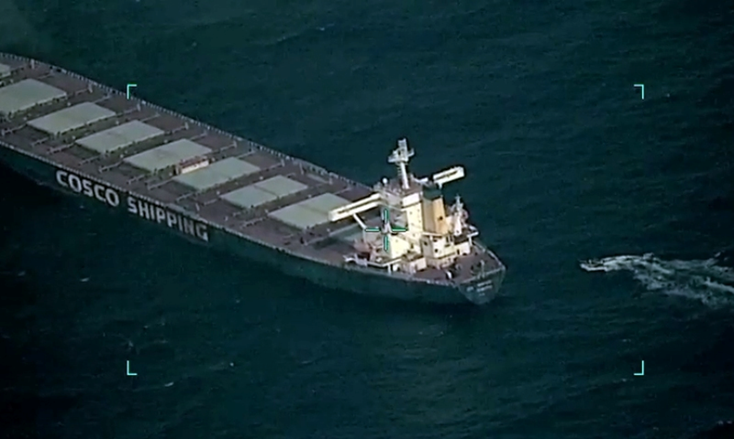
Two Commercial Vessels Hijacked Off Yemen and Somalia, 22 Indian Seafarers Among Crew
According to a senior Shipping Ministry official, all Indian crew
members aboard both vessels are safe, based on the latest information
available.
The first incident involved the
Eritrea-flagged oil products tanker M.T. Sibhu-1, which was hijacked on August
20 in the Gulf of Aden, around 30 nautical miles off the Yemeni coast. The
vessel has 20 crew members, including 16 Indians. The remaining crew comprises
one Syrian, one Sudanese and one Iraqi national, while the nationality of another
seafarer is yet to be confirmed. The
Shipping Ministry official said that, according to the vessel’s Recruitment and
Placement Service Licence (RPSL) agency, S K S Krishi Marine Services (OPC)
Private Limited, six armed pirates are currently on board the tanker and have
taken control of the vessel.The agency has been directed to submit an incident
report and subsequent periodic updates through the e-Navik online marine
casualty reporting system.
Maritime tracking data indicates that the tanker was approached by an
unauthorised vessel before control of the ship was lost. The incident comes
amid renewed piracy activity in the waters off Somalia and the Gulf of Aden.
The second incident involved
the Cameroon-flagged M/V LUTUF, which was hijacked on August 17 off the
Puntland coast of Somalia. The vessel has 10 crew members, including six
Indians, along with one Turkish national, one Georgian national and two Serbian
security guards. According to
maritime security reports, the vessel was boarded by eight armed pirates
carrying AK-47-type weapons and operating from two skiffs. The crew initially
sought refuge in the vessel’s citadel, but the pirates subsequently gained
access and brought the crew to the bridge.
The vessel is currently under
pirate control, although no injuries have been reported.
The ship was seized approximately 3.5 nautical miles off Marraya in
Puntland’s Eyl district and was subsequently taken towards Somalia’s Nugaal
coast, according to a Somali official cited by The Associated Press.
The M/V LUTUF was reportedly carrying Turkish weapons, communications
and satellite equipment destined for a Turkish military training facility in
Mogadishu. The hijackers are suspected of having links to a previous hijacking
incident.
The latest incidents have
heightened concerns over the security of Indian seafarers operating in some of
the world’s most strategically important shipping lanes. The Forward Seamen’s Union of India (FSUI)
also raised concerns on X over the dangers faced by Indian seafarers amid
escalating regional tensions. The union shared footage it described as showing
the hijacking of a vessel carrying Indian crew members in the Strait of Hormuz
on April 22. It remained unclear whether the footage related to a separate
incident or one of the latest hijackings. The incidents off Yemen and Somalia
add to the security challenges already facing commercial shipping in the Red
Sea, Gulf of Aden and wider Indian Ocean region, where vessels continue to face
piracy risks as well as attacks and disruptions linked to the conflict in
Yemen. Indian seafarers are also
facing heightened security concerns around the Strait of Hormuz, amid
continuing tensions involving Iran, Israel and the United States.
The developments are particularly significant for India, which has
emerged as the world’s second-largest supplier of seafarers after the
Philippines.
The 2026 BIMCO-ICS Seafarer Workforce Report estimates that India
supplies approximately 311,936 seafarers, highlighting the country’s
significant exposure to security risks affecting merchant crews across major
international shipping routes. The two hijackings underline the continuing
vulnerability of commercial shipping and seafarers in the Gulf of Aden and
western Indian Ocean and are likely to reinforce calls for stronger maritime
surveillance, coordinated naval security and enhanced protection measures for
merchant vessels operating in high-risk waters.

Related News