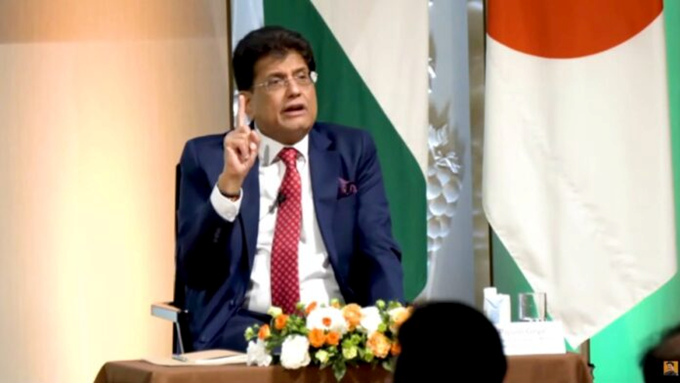
PiyushGoyal seeks higher Japanese investment, pitches India as manufacturing hub for the world
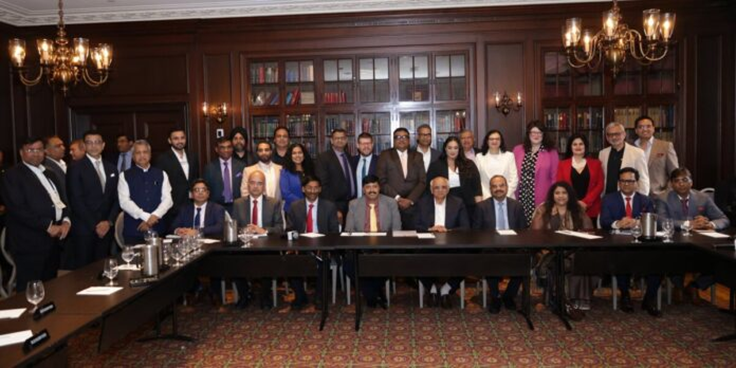
Addressing industry
representatives, Goyal outlined three key asks for companies looking to expand
their India footprint. “I have only
three suggestions or asks as I invite you to leverage the cost competitiveness,
our FTAs, and our engineering talent,” he said, urging firms to deepen
localisation to boost cost-competitiveness and strengthen component supply
chains to the rest of the world. Goyal called upon companies to establish more
research and development centres, global capability centres, and engineering
partnerships with Indian academia, while assuring governmentsupport through innovation
funding. The minister’s third point
referenced the broader strategic partnership between India and Japan,
highlighting a commitment of 10 trillion yen in Japanese investment into India
over the coming years. He noted this figure was reaffirmed during a recent
visit by a top Japanese dignitary, following the target set at the India-Japan
Summit 2025. “I think it’s time for new factories, new capacities to come up
in India and make an India for the world,”Goyal said, adding that the
government’s “Invest India”
agency would support investors throughout their journey.
Goyal also highlighted India’s expanding network of free trade
agreements, noting the country now has preferential market access to economies
worth a combined USD 70 trillion in GDP, up sharply from around USD 10 trillion
before 2014. He said India has added 38 developed and prosperous countries to
its trade network through nine FTAs signed over the past four years, covering a
combined USD 60 trillion. Citing Suzuki’s operations in India as an
example, Goyal noted the company now exports to more than 100 countries from
its Indian manufacturing base, underscoring the potential for other
manufacturers to use India as an export hub. Looking further ahead, Goyal pointed to
India’s economic trajectory, describing it as the fastest-growing large economy in the world today, currently
valued at USD 4 trillion and targeted to reach USD 30 trillion by 2047 the
centenary of India’s independence. He noted that on a purchasing power parity
basis, the Indian economy already stands at roughly USD 20 trillion.
He described this ambition as
part of the “Viksit Bharat
2047“ vision, which he said reflects a collective commitment
from India’s 1.4 billion citizens including industry, farmers, fishermen and
workers alongside the government, to building a developed India.
Related News