

EXCLUSIVE: The ships are ready. The ports are getting ready. What is missing is certainty
Most discussions about decarbonizing shipping still
begin in the wrong place: can vessels run on carbon-neutral fuels, and can
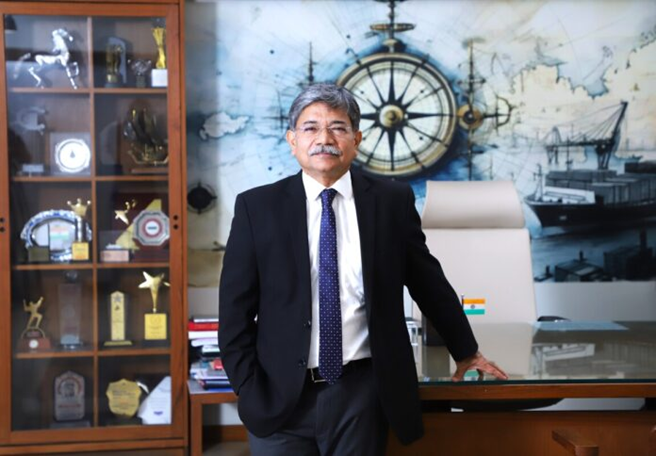
those fuels be produced and delivered? From where I sit, running one of India’s
largest ports, those questions are increasingly settled. Dual-fuel ships exist
and are on order, the fuels can be produced, and ports such as Kandla are
demonstrating that they can be handled safely.
The hard part is no longer the ship or the molecule.
It is the system that must form around them: the demand to justify investment,
the collaboration to share risk, and above all the regulatory certainty that
tells an investor a project will still make sense in ten years’ time.
India’s maritime sector is being transformed under two
national roadmaps, Maritime India Vision 2030 and Maritime Amrit Kaal
Vision 2047, aimed at building capacity, efficiency and sustainability,
with ports at the center of all three. Alongside the conventional build-out of
berths, deeper channels, storage, digitalization through NLP-Marine and
electrification, a more consequential shift is under way. Under the National
Green Hydrogen Mission, India intends to become a global hub for producing,
using and exporting green hydrogen, green ammonia and green methanol, and major
ports are being developed as integrated energy hubs: not just places where
cargo moves, but where green fuels are produced, stored and bunkered. That is a
significant change in what a port is for.
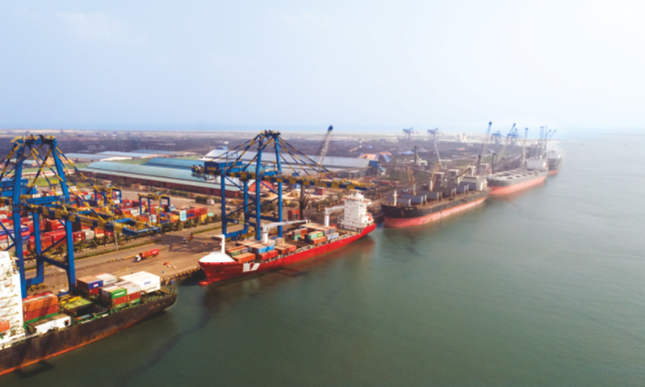
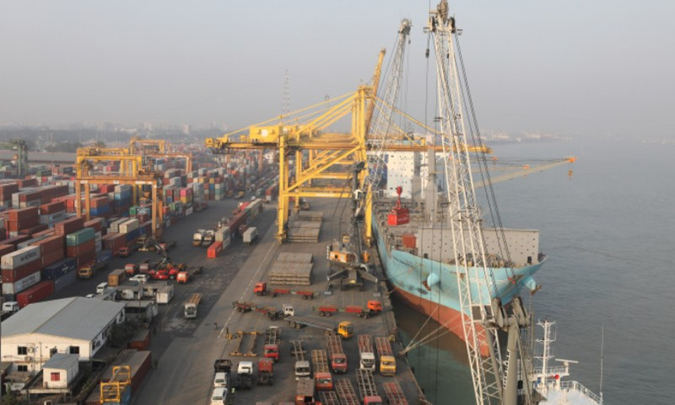
At Kandla we have
taken that literally, positioning the port as an integrated green hydrogen hub
for production, storage, export and bunkering. Industry is expected to invest
around US$20 billion in production facilities on port land over the next
decade, and we are building the plug-and-play infrastructure to match, from a
150 million liters per day desalination plant to renewable power connections to
the grid. We have also moved from
intent to demonstration. In February 2026 we completed a shore-to-ship methanol
bunkering trial, achieved Port Readiness Level 6 under the IAPH-DNV framework,
and are progressing towards Level 7 alongside ship-to-ship capability.
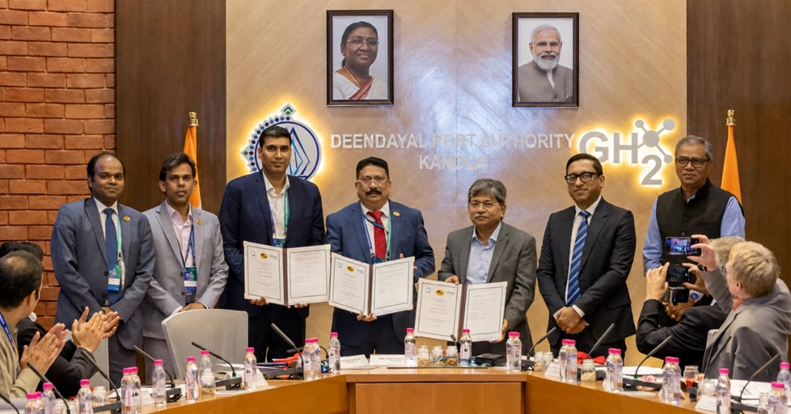
We were the first
port in the country to commission a one megawatt green hydrogen demonstration
plant, now scaling to ten, and our first green tug, under the Green Tug
Transition Programme, should be operational by November 2026. “Port readiness” is often reduced to steel
and tankage, but it also means regulatory preparedness, safety systems,
procedures and a skilled workforce. Here Kandla has an advantage: we have
handled methanol as a cargo for many years, so the ecosystem to manage the
molecule already exists. Our task has been to redesign existing systems to
treat methanol as a bunker fuel rather than freight. The ports likely to move
fastest may be those that already handle these molecules as cargo: repurposing
is quicker than rebuilding. The result is counter intuitive. At a well-prepared
port, physical readiness is now running ahead of the system meant to support
it. We can bunker. What we are waiting on sits elsewhere.
The first external
factor is demand. Shipping will be one of the main demand centers for green
fuels, but on its own it will not be enough. A commercially sustainable
ecosystem needs demand from several sectors at once – fertilizers, refineries,
steel, power and heavy mobility – which gives producers the scale and
confidence to invest in production, storage and distribution.
India’s early cost
position shows what scale can do. We start from a genuine advantage: abundant
renewable energy, competitive power tariffs, a growing manufacturing base and a
clear policy framework, strengthened by the Strategic Interventions for Green
Hydrogen Transition (SIGHT) scheme. The recent green ammonia procurement by the
Solar Energy Corporation of India is instructive: aggregating demand across
fertilizer plants through long-term contracts created the scale to improve
bankability, lower financing costs and deliver very competitive pricing. As
production scales, costs should fall further, lowering the delivered cost of
these fuels. None of this happens through
a single actor. Government provides policy and incentives, industry brings
technology and capital, and ports provide land, utilities and shared
infrastructure. Structured this way, risk is shared and investors gain
confidence.
Which brings me to
the real bottleneck. The challenges are usually summarized as affordability,
availability and acceptability. The hardest to provide, and the most important,
is certainty: the industry needs long-term clarity over what qualifies as
green, how lifecycle emissions are assessed and whether a fuel recognized in
one market will be accepted in another.
At present it does
not have that. The divergence between the European Union’s regulations and the
IMO’s proposed Net Zero Framework creates uncertainty over the viability of
commercial-scale green fuel production, and that uncertainty is what holds back
final investment decisions. Policy measures that place a compliance burden on
vessels running conventional fuels would help close the cost gap, but even
where a port is ready to bunker, the binding constraint is sourcing fuel that
qualifies as green under RFNBO rules at the volumes ships require. You can pass
every readiness level and still be unable to bank the project, because the
target keeps moving. Kandla’s response
is to commit anyway, but specifically. Given the order pipeline of methanol
dual-fuel vessels and their expected deployment on East Asia to Europe green
corridors, we are developing e-methanol production, storage and bunkering for
ships on the Singapore to Rotterdam trade lane. The tankage, pipelines and
protocols are already in place; our focus now is sourcing e-methanol that meets
RFNBO criteria. We have removed every variable we can control and are left
holding the ones we cannot: definition, regulation, and the certainty that
follows.
The fundamentals
are strong. India can become a global leader in green hydrogen and its
derivatives, and ports like Kandla will be pivotal in connecting that
production to global markets. As green fuels scale, new trade corridors will
form around production and bunkering hubs, and a well-placed west coast port is
positioned to become a significant gateway. This is as much a story about
energy security and investment as about emissions.
But it will not be
delivered by any one port, country or company. A net zero maritime economy
needs coordinated effort from governments, ports, shipping, fuel producers and
financiers, resting on a stable regulatory framework, investment, skills and
collaboration. The encouraging part is
how much of that is already underway. The frustrating part is that the one
thing the system needs most costs almost nothing to build. Ports such as Kandla
can build the tanks, pipelines, power connections and operating capability.
What only governments and regulators can provide is the long-term certainty
that turns readiness into commitment.
Related News