




Op-Ed: Rising bunker costs sharpen focus on fuel savings
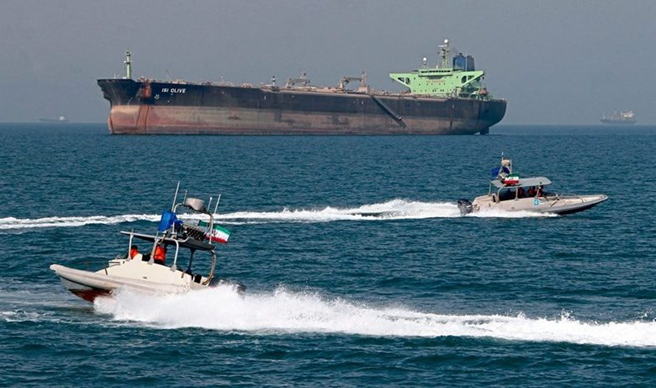
Recent estimates from
the European Federation for Transport and Environment suggest the Persian Gulf
crisis is now costing global shipping around $400 million per day in additional
operating costs compared with pre-crisis conditions. While some of this burden
will eventually be passed downstream into freight rates and consumer prices,
the immediate impact is currently being absorbed by operators. At the same
time, bunker costs have effectively doubled, rising from roughly $400 per tonne
for Very Low Sulfur Fuel Oil (VLSFO) to around $800 per tonne. With ongoing
constraints on heavy crude supply, it is likely that the true knock-on effect
on bunker prices is yet to be fully realized.
This is not an
isolated shock, but part of a broader pattern. Geopolitical volatility and
market uncertainty have significantly impacted shipowners’ operational strategy
in recent years, and this trend seems destined to continue. The outbreak of the
Russia-Ukraine conflict in 2022, combined with the Houthi attacks in the Red Sea, had already placed a
significant burden on shipping companies’ opex, curtailing global oil supplies
whilst also extending voyage times due to diversions around the Cape of Good
Hope. Against this backdrop, fuel efficiency is no
longer a marginal optimization exercise; it has become a fundamental driver of
shipowners’ operational strategies.
Shipping’s energy demand and associated costs are rising fast, with
global bunker sales forecast to approach a staggering quarter of a trillion
dollars by 2026. In this context, understanding the scale and sensitivity of
fuel expenditure is best illustrated at a vessel level. For example, a modern
VLCC consumes approximately 20,000 tonnes of fuel per year. At $400 per tonne,
fuel expenditure equates to $8 million per annum. However, since the outbreak
of the Persian crisis, that figure has doubled to $16 million. Nothing about
the vessels have changed; however, the financial exposure has. This market reality re-frames the
efficiency discussion. A 5% fuel saving under previous pricing conditions might
have delivered $400,000 in annual benefit. Today, the same efficiency gain
delivers $800,000. This completely alters the decision-making algorithm when it
comes to investing in—and payback for—clean technology and fuels. For an industry that has historically
operated as a price taker on fuel, this represents a key inflection point. At a
macro level, global bunker expenditure now represents at an extraordinary
portion of shipowners operating costs, and it is within this context that even
small percentage improvements translate into system-level financial impact.
However, alongside rising costs, shipping continues to face a parallel
challenge of sustained uncertainty over the long-term alternative fuel
pathways. Regulatory fragmentation, insufficient supply of nascent alternative
fuel technologies, and uneven infrastructure development have created a climate
of stasis when it comes to decisive financial investment. Rather than focusing
on a single dominating fuel, the market is increasingly moving towards a mix of
solutions, reflecting the different operational requirements and commercial
priorities of individual owners.
Each fuel pathway will bring trade-offs depending on vessel type,
trading route, and operational profile. Waiting for technological viability at
the required scale risks delaying meaningful progress at precisely the moment
when both emissions reduction and cost control are most urgent. The industry does not need a perfect
fuel. It needs deployable solutions that reduce cost, improve efficiency, and
lower emissions within established infrastructure. This is where established fuel innovation
that works within existing systems becomes particularly relevant. Technologies
that utilize lower-value refined crudes whilst improving feedstock flexibility,
and enhancing combustion efficiency offer a pragmatic bridge between current
operational realities and future fuel ambitions. One such approach has been developed by
Quadrise, which has focused on emulsion fuel technologies for two decades, that
are specifically designed to integrate directly into existing marine
infrastructure. Quadrise MSAR fuel
demonstrates how this approach can translate into operational and economic
gains without the need for substantial retrofitting. In medium and slow speed
diesel engines, MSAR has been shown to improve fuel consumption by
approximately 3-6% on an energy-to-power basis. In practical terms, this
equates to a saving of $24 to $48 per tonne saving, equivalent to $480 to $960
per tonne saved per day, and $480,000 to $960,000 per annum for a VLCC. Beyond cost efficiency, MSAR also delivers
performance and environmental benefits, which includes reduced NOx emissions by
20-45 % so enables approximately 7-9% more energy extraction per barrel
compared to conventional fuels, while improving refinery margins by upgrading
low-value residuals into higher-value marine fuel. MSAR also lays the foundations for the
integration of bioMSAR, which delivers emissions reductions of over 20%
compared with heavy fuel oil (HFO), while maintaining compatibility with
existing propulsion systems. The significance of these developments lies not in
positioning them as a single solution, but in demonstrating a blueprint for
practical transition. In a market constrained by a lack of capital commitments,
infrastructure incompatibility, and geopolitical volatility, technologies that
reduce both opex and emissions simultaneously are uniquely positioned. The
current crisis has further highlighted the importance of fuel flexibility. As
geopolitical tensions continue to disrupt energy markets and expose supply
chain vulnerabilities, the ability to remain flexible and avoid dependence on a
single fuel pathway has become a strategic advantage. The maritime industry
does not have the luxury of waiting for a fully mature hydrogen economy or a
globally standardized alternative fuel network. It must operate in the present
while transitioning toward the future. That requires solutions that are
immediately deployable and scalable under current fuel price conditions. Ultimately, the current bunker market is
necessitating a shift in mindset. Efficiency is no longer about incremental
gains; it has become a business imperative. In an era defined by volatile fuel
markets, supply chain disruption and geopolitical uncertainty, shipowners must
act decisively to utilize the solutions that are at their fingertips to secure
vital cost and emissions savings, while preserving the flexibility to adapt as
the future fuel landscape continues to evolve.
Peter Borup is the CEO of Quadrise, an energy technology provider developing
alternative fuels for marine and industrial applications.
Related News