CMA CGM tipped for $3bn Yangzijiang megamax order
Broker MB Shipbrokers
has linked Yangzijiang to the 12-ship project with an unnamed leading liner,
while Alphaliner has identified Rodolphe Saadé-led CMA CGM as the most likely
owner and said a letter of intent has been signed. Neither CMA CGM nor the
Singapore-listed Chinese shipbuilder has confirmed the deal. The ships are expected to feature LNG
dual-fuel propulsion and deliver in 2029 and 2030. Market estimates put pricing
at around $245m to $250m per vessel, giving the full programme a value
approaching $3bn. CMA CGM has been
sounding out yards for another series of megamaxes for several months.
Shipbroking reports earlier this summer linked the French liner, along with MSC
and Maersk, to fresh enquiries for ships in the 20,000 to 24,000 teu range as
another wave of ultra-large containership contracting gathered pace. A return to Yangzijiang would build
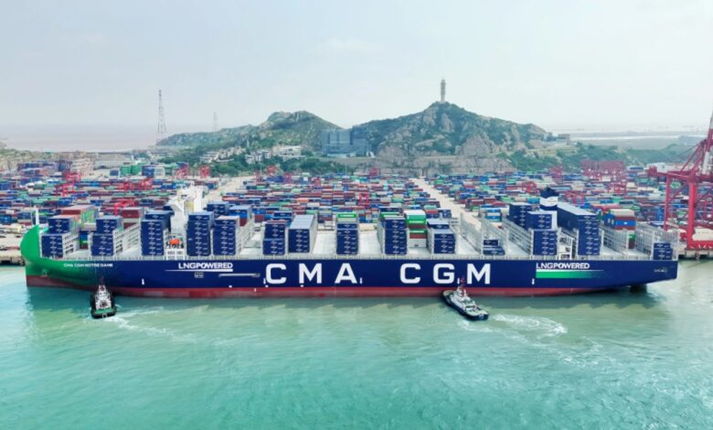
directly on a relationship established with CMA CGM’s previous 10-ship, 24,212
teu LNG dual-fuel programme ordered in 2023.
The first ship in that
series, CMA CGM Notre Dame, was delivered in May, followed by CMA CGM Pantheon in July. The remaining eight are
scheduled to follow through March 2028.
The 400 m ships were designed by MARIC and are deployed on CMA CGM’s
flagship Asia-Europe network. The first vessel joined the French Asia Line
following delivery, with Yangzijiang completing it around 50 days ahead of the
contractual date. If the latest dozen
are confirmed, CMA CGM would eventually have 35 LNG-powered megamaxes across
three closely related series. Its
first nine 23,000 teu-class LNG ships entered service from Chinese state yards
in 2020 and 2021, followed by four larger units delivered in 2025 and 2026. The
10 Yangzijiang vessels now entering the fleet form the third generation.
Another 12 ships would provide enough megamax tonnage to populate roughly three
full Far East-Europe strings. The
potential order would also add momentum to CMA CGM’s push up the liner
rankings. Splash reported in July that the Marseille-based carrier is on course
to overtake Maersk as the world’s second-largest containerline, with its
aggressive newbuilding programme steadily closing the capacity gap. At the
time, Alphaliner put CMA CGM’s operated fleet at around 4.4m teu against
roughly 4.7m teu for Maersk. For
Yangzijiang, the deal would mark a return to the 24,000 teu segment after a
three-year gap. The private Chinese builder entered the second half of 2026
with 256 ships worth $22.4bn in its backlog, including 151 containerships. Nine
of the existing CMA CGM megamaxes remained on the books at the end of June. Yangzijiang secured $1.75bn of new orders in
the first six months and another $200m in July against a $4.5bn full-year
target. Its 2029 delivery slots are almost full, with the yard already taking
work for 2030. The yard has
previously demonstrated its credentials at the top end of the boxship market
with the 24,346 teu MSC Irina, delivered in 2023 and at
the time the world’s largest containership.
CMA CGM is not alone in heading back to yards for another major round of
capacity. Brokerage sources say Maersk is lining up a programme of around 40
LNG dual-fuel mainline ships, including roughly 20 vessels of at least 24,000
teu and another 20 in the 18,000 to 20,000 teu range, with contracts
potentially signed by October and deliveries starting from 2029. At an average
21,000 teu, the programme would add about 840,000 teu and take Maersk’s
orderbook to around 2.05m teu, behind MSC but ahead of Cosco. Brokers have
separately reported that Maersk has exercised options for another six 18,600
teu LNG dual-fuel ships at New Times Shipbuilding for delivery in 2030, adding
to the eight firm vessels it booked there in February. Maersk has not publicly
confirmed either the wider programme or the option exercise.
Related News