The agreement focuses on how goods move between inland production centres, warehouses and ports. Multimodal logistics parks can give shippers a place to consolidate cargo, store it and transfer it between road and rail where both modes are available. At a port-linked facility, exporters can group smaller consignments before dispatch, while importers can consolidate onward deliveries from the gateway. The partners have yet to identify park locations, transport links, handling capacities, investment commitments or construction schedules. Sandeep Kumar Reddy Dodla, CWC’s regional manager for Amaravati, and Praveen Adhithya C. V., chief executive officer of APMB, signed the agreement. Andhra Pradesh minister B. C. Janardhan Reddy, APMB Chairman DamacharlaSatyanarayana and CWC Executive Director B. Nirmal attended the signing. The agreement fits into Andhra Pradesh’s wider effort to link port development with industrial growth. The state’s Industrial Development Policy for 2024–29 c
The Ministry of Ports,
Shipping and Waterways gave in-principle approval to initiate the IPO on 3
February 2026. Kamarajar Port’s board followed with its own in-principle
approval on 11 February. The port issued a request for proposals to select
book-running lead managers in August, with bids due in September. The offer could include a sale of
existing shares worth about ₹1,200 crore, while a decision on issuing new
shares may come later. Proceeds from an offer for sale go to the selling
shareholder. A fresh issue would raise capital for Kamarajar Port itself. The
proposed offer size and the reported 2027 timetable remain subject to
finalisation. Kamarajarwas
incorporated in 1999 and developed as Ennore Port, initially to handle thermal
coal for Tamil Nadu’s power sector and ease pressure on Chennai Port. It was
India’s first major port incorporated under the Companies Act. India’s other
government-owned major ports operate as statutory authorities under the Major
Port Authorities Act, 2021. Chennai
Port Authority originally held a one-third stake and acquired the Centre’s
remaining interest in 2020. Kamarajar has since developed a broader cargo base
covering containers, automobiles and liquid cargo alongside coal. It largely
follows the landlord model, under which private operators develop and run
terminals under concession agreements.
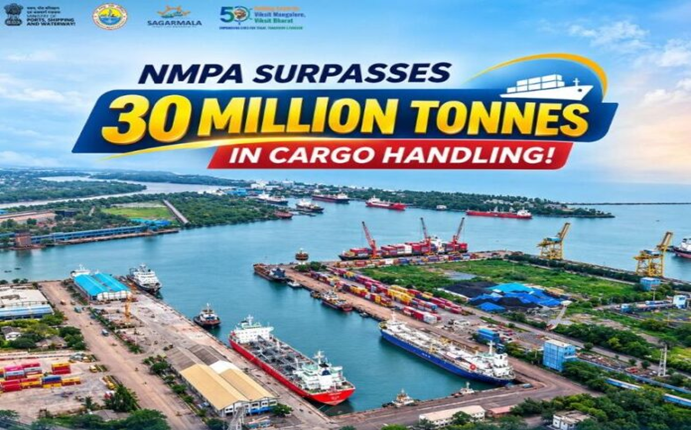
Kamarajar handled 30.69 million tonnes in the first seven months of
financial year 2026–27, up 9.83% year on year, according to Ministry of Ports,
Shipping and Waterways data. Coastal cargo rose 28.75% to 13.66 million tonnes,
while overseas cargo slipped 1.75% to 17.03 million tonnes. October throughput
reached 4.70 million tonnes, up 14.73% from a year earlier.
In 2025–26, the port handled 49.08 million tonnes, of which coal accounted for 25.72 million tonnes. It also handled 191,825 automobiles and 700,639 twenty-foot equivalent units (TEUs). Net profit rose to about ₹596 crore from ₹539 crore the previous year, while capital expenditure increased to ₹478 crore from ₹201 crore.
Related News