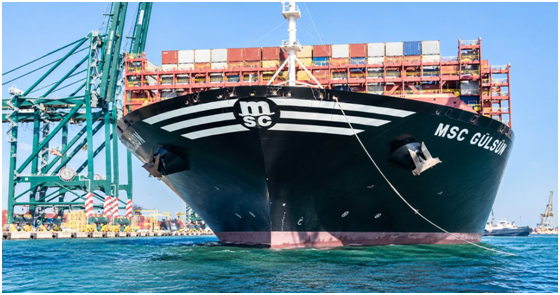
MSC plans direct container service from Mundra and Port Qasim to Saudi Red Sea ports
The planned rotation is Mundra
→ Port Qasim → Jeddah → King Abdullah Port → Mundra. Ships would call at Port
Qasim after leaving Mundra, then proceed to Jeddah and King Abdullah Port
before returning to Gujarat. The service is expected to use vessels with
capacities of about 2,500 to 3,000 twenty-foot equivalent units (TEUs).The
vessel sizes indicate how much each ship can carry. The number of sailings and
ships assigned to the loop will determine how much capacity MSC adds to the
trade lane. Port-to-port transit times have yet to be published.Mundra is a
gateway for shippers in northern and north-western India, with an electrified
rail link to the Indian Railways network at Adipur. Its inclusion in the new
loop would give inland shippers using the Gujarat port another option for
Saudi-bound containers. The call at Port Qasim would add a direct connection
from Pakistan to both Saudi ports on the same rotation.Other carriers already
serve parts of the trade. In June 2026, the Saudi Ports Authority, known as
Mawani, announced an Emirates Shipping Line service connecting Jeddah Islamic
Port with Mundra and Djibouti. Saudi authorities also announced Maersk services
earlier in the year linking Jeddah and King Abdullah Port with Mundra,
NhavaSheva and Salalah. MSC’s proposed rotation adds Port Qasim to its own
direct South Asia–Saudi Red Sea loop.
MSC is also planning to add
King Abdullah Port and Jeddah to its Zephyr service and remove Salalah from
that rotation. The revised Zephyr loop would run from Colombo to Djibouti, King
Abdullah Port and Jeddah before returning to Colombo. The North India–Red Sea
service would serve the same two Saudi gateways from Mundra and Port Qasim.
Related News