



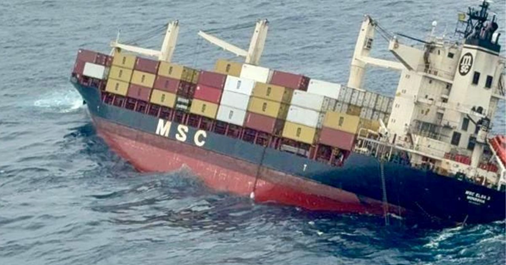
Kerala govt reveals cargo details of MSC Elsa 3 cargo ship
The Kerala state government has
released a detailed breakdown of the cargo on board the ship that recently sank
in the Arabian Sea off Kerala’s Kochi coast. According to the report, 13
containers were carrying calcium carbide, a chemical that reacts with water to produce
highly flammable acetylene gas. Of these, 8 containers were stored in the
ship’s inner compartments, while 5 were kept outside, raising environmental and
safety concerns due to potential water exposure. Additionally, the government
addressed confusion around four containers labelled ‘cash’, clarifying that
they contained cashew nuts, not currency. In total, the cargo included 46
containers loaded with coconuts and cashews, while 87 containers were carrying
timber.
Kerala government face criticism
for slow investigation into the sinking of a cargo ship off the Kochi coast.
The Director General of Shipping has admitted that the ship sank because of a
mistake with ballast water, which helps keep the ship balanced. The ship filled
this water at Adani’s Vizhinjam port after loading cargo, before setting sail. It is alleged that the
government is taking time to file a case because it would bring port
authorities into investigation.
According to government
sources, the lack of action is due to the accident occurring outside the
state’s 12-nautical-mile jurisdiction. India’s territorial waters extend 12 nautical
miles from the coastline. Beyond that is the contiguous zone (up to 24 NM) and
then the Exclusive Economic Zone (up to 200 NM), which fall under central
government jurisdiction. This means that the Kerala government is not legally
required to start an investigation. However, since the ship took ballast water
at Vizhinjam, some part of the ship’s voyage and safety checks fall under state
oversight.
It is the people along Kerala
coastline who are prone to the danger of cargo and oil spill risk. Several
fishermen have already said that they are getting a reduced catch and public
are hesitant to buy fish from them fearing pollution.
Related News