
Indian Subcontinent container capacity from East Asia falls 14%
In what is an effective 14% year-on-year decline in
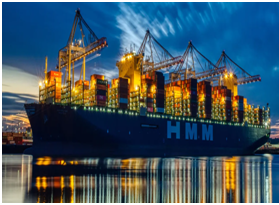
capacity HMM withdrew from the trade, taking 115,000 teu
out of the trade while the liquidation of SeaLead added a further 66,000 teu of
offered capacity that has been withdrawn.
“Singapore-based SeaLead Shipping has filed for
voluntary liquidation, bringing to a close a near-decade of operations,”
commented Alphaliner, who added that the company’s demise followed “aggressive
sanctions by the US over its alleged links to Iran.”
In 2025 the US Office
of Foreign Assets Control issued sanctions against 16 SeaLead vessels that were
ultimately scrapped. New sanctions were issued by the same office against the
company and its subsidiaries, including those in India, the UAE and Marshall
Islands.
Carriers that held
less than 1% of the deployed capacity along with HMM and SeaLead accounted for
nearly 90% of the decline in capacity on the trades.
CMA CGM, which has
ordered vessels at Indian shipyards and reflagged some of its tonnage to the
Indian register, increased its capacity by 70,000 teu, via the launch of the
Far East–India 'TVI' and Far East–Middle East 'CIMEX3'.
“These more than
offset the downsizing of 'CIMEX', where ship sizes fell from around
10,000–16,000 teu to 2,800–5,100 teu. Earlier this year, the 'CIMEX' left the
OCEAN Alliance network and became a standalone CMA CGM service,”
commented Alphaliner.
Meanwhile, Cosco Group suspended the Ocean
Alliance's 'MEA5', to which Cosco had contributed six 19,000–21,000 teu ships.
However, the carrier added the Far East – ISC 'SEI1' and 'SEI2' services and
increased contributions to three other services.
The world’s largest
carrier also increased its offered capacity by increasing the size of its
ships, while decreasing the number of vessels from 25 to 18.MSC upgraded its Far
East - ISC 'Shikra' service from ships of between 8,000 and 9,500 teu to
between 19,000 and 24,000 teu and added KhorFakkan and Sohar to its rotation.
Related News