


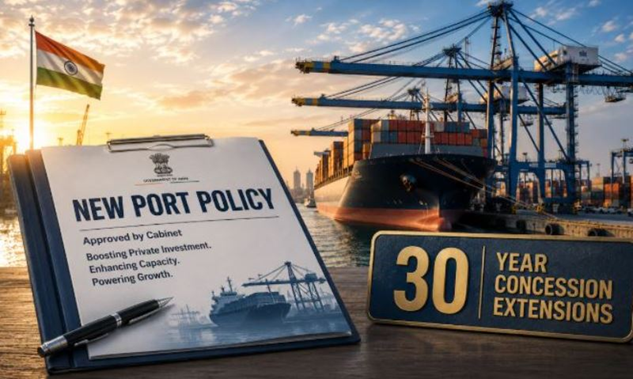
Cabinet Approves Revised Captive Port Policy to Boost Port-Linked Industrial Growth
The revised Captive Policy, approved on Friday,(31
july) updates the original 2016 framework to reflect evolving business
requirements and regulatory changes while providing a transparent and
investor-friendly mechanism for the development of captive port facilities.
Under the new
policy, existing captive users will be allowed to develop additional berths,
jetties, terminals or Single Buoy Moorings (SBMs) to meet enhanced captive
requirements. Eligible government entities can now secure concession periods of
up to 30 years, providing long-term certainty for future investments.
Captive users, or
Port Dependent Industries, are industrial units that operate dedicated port
facilities exclusively for handling raw materials or finished products required
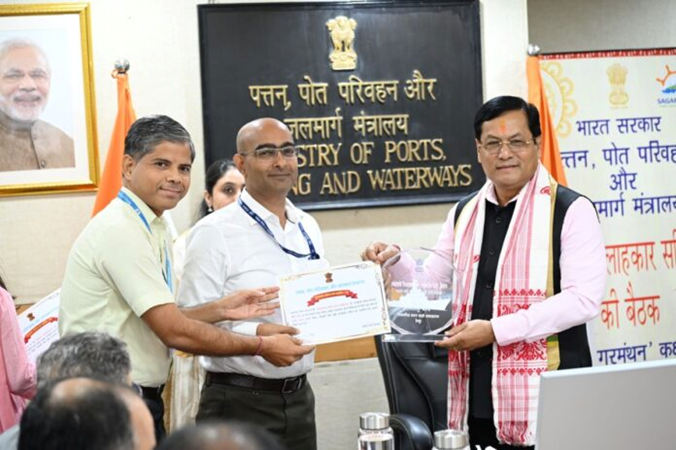
for their manufacturing and production activities. Union Minister for Ports, Shipping and
Waterways, Sarbananda Sonowal, said the revised policy reflects the
government’s commitment to creating a predictable, transparent and
investor-friendly framework for port-led industrial development. “The revised Captive Policy is a major reform
that balances investor confidence with public interest,” Sonowal said. He added
that long-term certainty for existing operators, easier capacity expansion and
a transparent investment framework would significantly strengthen India’s port
infrastructure.
The policy also
introduces a structured mechanism for capacity expansion by existing captive
operators. Major Port Authorities will undertake price discovery through
competitive bidding among eligible PDIs handling similar cargo, while granting
the existing concessionaire the Right of First Refusal (RoFR) to match the
highest bid.
To prevent misuse of the expansion route for extending
concession periods, any additional berth or terminal developed under the
expansion proposal will have a concession tenure that remains co-terminus with
the maximum permissible concession period of the existing facility.
In a significant
relaxation, the revised policy removes the requirement for competitive bidding
for eligible government organisations, subject to prescribed safeguards and
availability of waterfront land. Eligible entities include Central and State
Government departments, statutory authorities, autonomous bodies, Central and
State Public Sector Undertakings (CPSUs and SPSUs), and government-controlled
joint ventures operating in sectors such as fertilisers, food, petroleum, oil
and gas, coal, steel and other sectors notified by the Ministry of Ports,
Shipping and Waterways. Concessions for these entities will be awarded at the
notified floor price.
The revised Captive
Policy will be implemented across all major ports and is expected to enhance
cargo throughput, optimise the utilisation of waterfront assets and generate
sustained revenue for port authorities, while involving no additional financial
implication for the Government of India.
Related News