Port of Baltimore breaks ground on new grain transloading facility
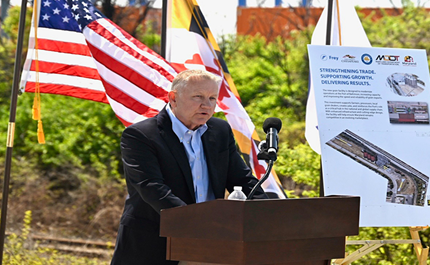
The Helen Delich
Bentley Port of Baltimore yesterday (9 Apr) hosted a groundbreaking ceremony
for a new grain transloading facility at the Seagirt Marine Terminal. Under a
partnership agreement between Ports America Chesapeake and Frey
Commodities, the new facility will make it easier for Maryland
farmers to get their products to the port for export worldwide. The four-acre
facility will include three grain silos, and be used to facilitate the export
of soybeans, corn, wheat, and other agricultural commodities around the world.
The facility is expected to be open and operational in August 2026. Once
operational, the facility will function as a full-service grain elevator with
the capacity to load more than 200 containers per week. The three silos will
have a combined capacity of 60,000 bushels and support inbound shipments from
both truck and rail.
Short line rail access to CSX and Norfolk Southern
will enhance connectivity for Midwest producers, providing a more direct and
efficient export route to markets through the Port of Baltimore.
Currently, there is no
direct transloading facility at the Port of Baltimore to move grain and
soybeans from trucks into containers for export shipping operations. Farmers
currently need to place their grain into empty shipping containers located
offsite, which are then picked up and brought into the Port. Under the new
system, a farm truck will come directly into the Seagirt terminal, deposit its
grain onto a conveyor system, which will transport it directly into a silo.
Ports America Chesapeake will then remove the grain from the silo when it’s
ready to ship and place it into containers for export operations.
This will enable the project to also be more
environmentally beneficial by reducing offsite loading emissions. It will also
significantly reduce truck miles, lower transportation costs, and streamline
the supply chain for regional producers.
“This new partnership with Frey adds transloading
capabilities at the Port of Baltimore and creates a more efficient, streamlined
supply chain for farmers while strengthening the region’s competitive
position,” said Mark Schmidt, president of Ports America Chesapeake. “Direct
delivery to Seagirt reduces complexity and cost for producers and allows the
Port to expand agricultural exports.”
“This is a significant achievement for Maryland
farming, agricultural logistics, and the Port of Baltimore,” said Maryland
Deputy Transportation Secretary Samantha Biddle. “Thanks to the unique
partnership between Ports America Chesapeake and Frey, we will soon have a much
more efficient, as well as cleaner and greener, way of moving different
Maryland produced grains into international markets.”
“As the nation’s top
port in the country for handling farm machinery, farms across the nation have
long depended on the Port of Baltimore,” said Jonathan Daniels, Maryland Port
Administration executive director. “This new transloading facility will be
another way that our port separates from the pack in being the best
agricultural port in the U.S.” “This project will be a major win for grain
producers in Maryland, Delaware, and Pennsylvania by providing a more efficient
supply-chain model that connects them to growing overseas demand,” said Mike
Adamchak, chief commercial officer at Frey. “It also strengthens our ability to
connect producers across North America with global markets.”

Related News