



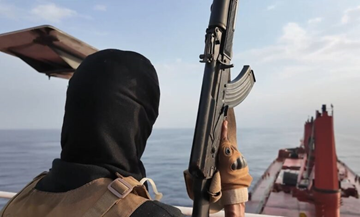
Houthis keep up pressure on Saudi shipping
The group said it
fired ballistic missiles at the 49,990 dwt chemical and products tanker NCC
Ghazal for ignoring warnings and violating its navigation ban. Houthi spokesman
Yahya Saree claimed the vessel was forced to retreat. Maritime security analyst Martin Kelly
said NCC Ghazal was struck by anti-ship missiles in the southern Red Sea and
turned back. Neither Saudi authorities nor operator Bahri had confirmed damage
at the time of writing. The
2014-built tanker switched off its AIS on July 23 and was last publicly tracked
near Yanbu. UKMTO separately reported that the master of an unidentified tanker
heard an explosion near Jizan. The vessel and crew were safe, with no pollution
reported, but UKMTO did not link the incident to NCC Ghazal.
The latest target follows attacks on Encelia, Layla
and NCC Masa. Saudi authorities confirmed that Encelia caught fire after being
struck, while the Houthi claim against Layla has not been independently
verified. NCC Masa sustained only superficial damage and continued its
voyage. The campaign has produced a volatile traffic picture rather than a
complete closure. Kpler data showed just 11 vessels passing Bab el-Mandeb on
Sunday, the lowest total in months. Crossings recovered to 28 on Monday and 37
on Tuesday, the highest since July 19. Tuesday’s movement comprised 20 ships
entering the Red Sea and 17 leaving, although no VLCCs or LNG carriers made the
passage. The Joint Maritime
Information Center has raised the threat level for the southern Red Sea and Bab
el-Mandeb to substantial, assessing further attacks as a strong
possibility. Diplomacy is now
extending beyond Hormuz. The National newspaper
in the UAE reported that the United States and Iran have widened their
unofficial contacts to include maritime security in the Red Sea and Bab
el-Mandeb.

Related News