




BAR Technologies: Stop treating decarbonization as a “future fuel” problem
Responding to the
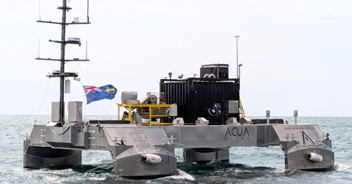
report, BAR Technologies — inventor of the WindWings wind propulsion system —
said that while the industry is right to plan for long-term fuel pathways, too
much of the decarbonization debate remains focused on what may become available
in the future rather than what can be deployed now. The EY Greece study identifies energy efficiency and operational
measures as among the most practical near-term actions available to shipping.
BAR Technologies argues that wind propulsion, already delivering measurable
fuel and emissions savings on commercial vessels, must be recognised as a
proven part of that immediate response.
Wind propulsion has
also passed an important market milestone. According to the International Windship Association, more than
100 large commercial cargo ships, representing over five million tonnes of
deadweight capacity, are now equipped to make use of wind power. That is almost
five times the number recorded in May 2022, clear evidence that the technology
is moving into the commercial mainstream. BAR Technologies says that it is
playing a significant part in this transition: By the end of 2026, 10 vessels
will be operating with 23 WindWings installed, giving a combined saving of
approximately 100t of CO2 per day.
John Cooper, CEO of BAR Technologies, said: “Shipping needs to stop
treating decarbonization as something that only begins when future fuels arrive
or every detail of the IMO’s Net-Zero Framework is settled. The industry cannot
allow the absence of perfect policy certainty to become an excuse for inaction.
Proven technologies are available now, and owners can act today.” Unlike
alternative fuels, wind requires no new fuel-production facilities, bunkering
infrastructure or global supply chain. It is freely available as an energy
source and can reduce a vessel’s dependence on whichever fuel it uses. Cooper continued: “Wind propulsion is not
waiting to be invented or proven. It is already operating on commercial vessels
and reducing the amount of fuel they need. The priority now should be to remove
the barriers preventing more owners from investing.”
For wind propulsion,
those barriers are increasingly commercial and financial rather than
technical. Under many chartering
arrangements, the owner funds the technology while the charterer receives much
of the benefit through lower fuel consumption. Until charterparty structures
allow the costs, risks and savings to be shared more effectively, owners can be
left carrying the investment and long-term performance risk.
Access to finance is
another significant constraint. Without competitive green lending or blended
finance, owners may have to fund emissions-reduction technology at conventional
commercial borrowing rates. This can lengthen the payback period, particularly
in the tramp, bulk and tanker markets, where routes, earnings and charter
durations are less predictable. The EY
study concludes that the pace of shipping’s transition will depend on coordination,
commercial bankability, access to finance and action across the maritime value
chain. Cooper added: “But the real way
to unlock action now is to make green investment affordable. Shipowners need
access to financing that makes proven emissions-reduction technologies
commercially viable today, not at some point in the future. If we can lower the
cost of capital and create funding structures that recognise both the fuel
savings and the environmental value these technologies deliver, far more owners
will be able to invest. “Wind propulsion
has already passed the technology test. Affordable finance, alongside
charterparty structures that share the benefits fairly, is what will unlock
deployment at scale.”
Related News