



Amazon Becomes First E-Commerce Company to Operate on Western Dedicated Freight Corridor
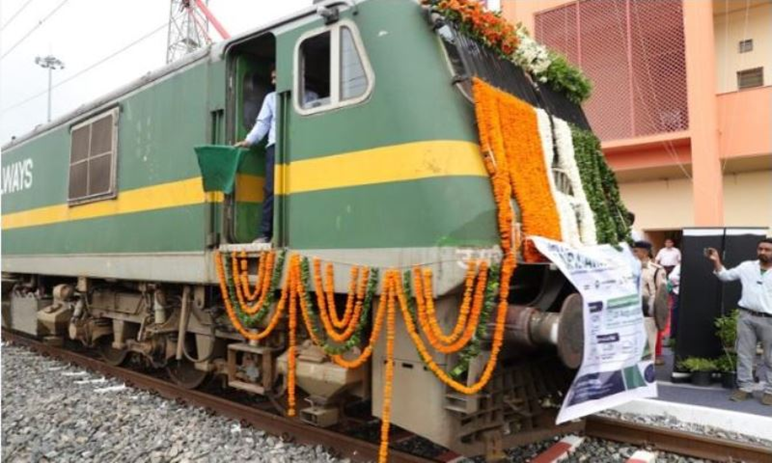
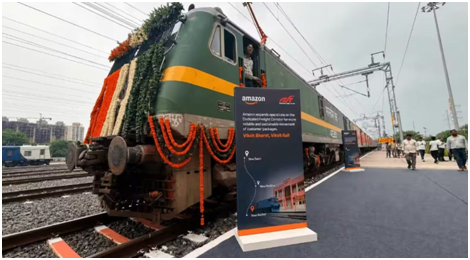
The daily rail movement will
connect Amazon’s northern and western network, with over 10 Van Parcels
operating on the route. The shift moves shipments from surface transportation
to rail, strengthening multimodality while enabling more reliable and
sustainable freight movement across the network.
The corridor will link
Amazon’s operations across key regions including Delhi, Ahmedabad and Surat,
with onward connectivity to Pune, Mumbai and Goa, supporting the movement of
shipments ahead of the festive season.
The expansion strengthens the role of rail within Amazon’s multimodal
transportation network across northern and western India, extending a collaboration
with Indian Railways that began in 2019, when Amazon became the first
e-commerce company in India to use the railway network for express parcel
movement. Amazon India said its rail network has since grown from a single
train in 2019 to more than 140 trains operating across 130 intercity routes
connecting over 100 destination cities.
Kishore Lanka,
Director-Operations at Amazon India, said the company is increasing
multimodality across its transportation network by expanding its use of
dedicated freight infrastructure, leveraging rail as an economical, reliable
and sustainable mode of transportation. He said Amazon looks forward
to deepening its collaboration with Indian Railways and DFCCIL to strengthen
its logistics network, improve operational efficiency and support the evolving
needs of customers across India.
The WDFC spans approximately
1,504 km from New Dadri in Uttar Pradesh to the Jawaharlal Nehru Port Terminal
near Mumbai. Dedicated Freight Corridors are designed to decongest the existing
rail network, increase average freight train speeds, enable heavy-haul train
operations, connect ports and industrial areas for faster freight movement, and
reduce overall logistics costs. Manoj
Singh, Member (Operations and Business Development) at the Railway Board, said
the DFC offers a greener, faster and more reliable mode of transportation,
enabling cargo to travel overnight and reach its destination the next day. He
said the service could move 350-400 tonnes within 24 hours, offering an economical
and sustainable freight solution that also creates opportunities for smaller
businesses to benefit from the DFC network.
Related News