



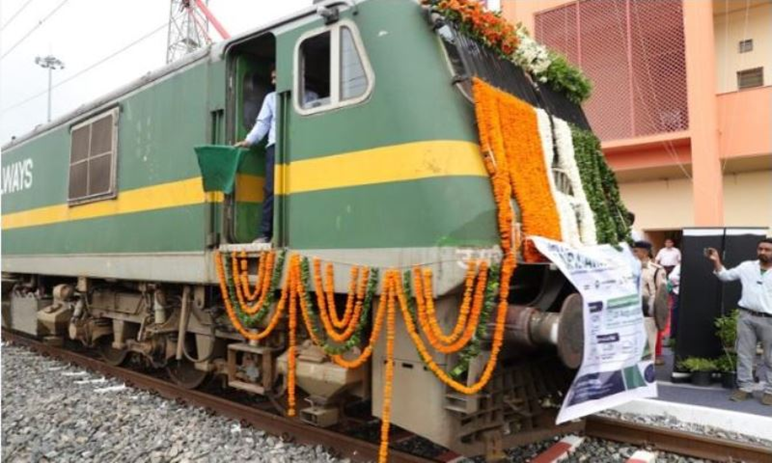
DFCCIL Launches Rapid Cargo Service Linking NCR and Gujarat
The service began from New
Dadri in Uttar Pradesh on August 18, with the return service from New Ancheli
in Gujarat scheduled to start on August 20. The route covers approximately
1,200 km one way, with New Motidau in Mehsana serving as an intermediate
loading and unloading point.
DFCCIL said the service will
operate daily, providing a scheduled transit time of around 23 hours between
New Dadri and New Ancheli. The faster connection is expected to improve the
movement of parcels between northern and western India while providing an
alternative to long-distance road transportation. The JPP-RCS is aimed at a broad customer
base, including e-commerce companies, FMCG businesses, retailers, courier
operators, logistics aggregators, manufacturers, traders and bulk parcel
customers. The service combines rail transportation on the dedicated freight
corridor with road-based first- and last-mile delivery.
The launch also expands the reach of rail-based parcel transportation
beyond the Ahmedabad region. Under the earlier NMGHS parcel service,
destinations were primarily served up to Ahmedabad. The new service will facilitate
movement towards Surat and Mumbai, allowing cargo to connect onward to those
markets.
DFCCIL is supporting the service through a digital booking system on its
Freight Business Development portal. Parcel space can be booked through the
Virtual Aggregation Platform, with online tracking and integration with
logistics aggregators intended to improve shipment visibility and planning.
The service is expected to generate approximately ₹21 lakh in revenue
per round trip, translating into an estimated annual revenue potential of
around ₹76 crore with regular operations.
The initiative is also aligned
with efforts to shift suitable long-distance freight from road to rail. By
combining dedicated rail capacity with road-based collection and delivery,
DFCCIL aims to offer customers a more reliable and potentially more sustainable
logistics solution while reducing road congestion and improving freight
efficiency. For India’s logistics
sector, the launch represents another step in expanding the commercial use of
the Dedicated Freight Corridor beyond conventional bulk freight. Faster
scheduled parcel services could help rail capture a larger share of India’s
growing time-sensitive cargo market, particularly as e-commerce and organised
retail continue to expand. With
regular daily operations now planned between the NCR and Gujarat, DFCCIL’s
Rapid Cargo Service could strengthen the Western DFC’s role as a high-speed
logistics backbone connecting major consumption, distribution and industrial
centres across northern and western India.
Related News