
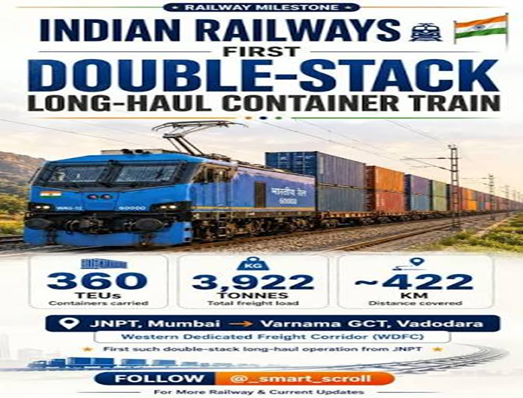
Indian Railways’ double-stack long-haul train carries 360 TEUs from JNPT to Vadodara
The train departed
from JNPT at 7 pm on August 21, 2026. The operation demonstrated the capability
of the Western DFC to move a large volume of containerised freight in a single
long-haul movement.
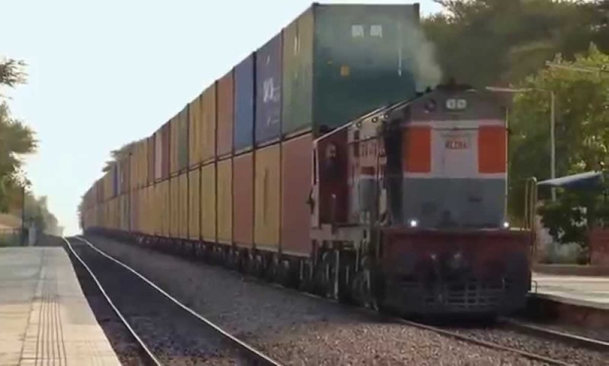
First double-stack long-haul train runs on Western DFC
The long-haul formation comprised two double-stack container rakes combined
into a single train movement. Each rake carried 45+1 containers. The leading
rake carried 1,817 tonnes, while the trailing rake carried 2,105 tonnes.
Together, the two rakes transported 360 TEUs, with a combined tonnage of 3,922
tonnes. The formation covered approximately 422 km between JNPT and the Varnama
terminal in Vadodara division. The
operation allowed a significantly larger volume of containerised freight to be
transported in a single long-haul movement. By combining two double-stack
rakes, Indian Railways demonstrated the potential to move more containers in
one train rather than using multiple separate movements for an equivalent
freight volume. The operation also highlights the role of dedicated freight
infrastructure in supporting the movement of containerised cargo between ports
and inland terminals. The long-haul double-stack formation can
help improve the efficiency of container transportation in several ways. Moving
more containers in a single train can reduce the number of train movements
needed to transport the same volume of freight. This can help make better use
of available capacity on dedicated freight routes. It can also support faster
evacuation of containers from ports and terminals, potentially helping reduce
container dwelling time and terminal congestion.More containers, fewer train
movements. Indian Railways said
long-haul double-stack operationscan reduce the requirement for locomotives and
container flat wagons needed to transport an equivalent volume of freight.
Higher carrying capacity per movement can also improve the utilisation of
available route capacity. Fewer train movements may be needed to move the same
amount of cargo, allowing the freight corridor to handle larger volumes more
efficiently. The operation can also support faster freight movement and help
reduce overall transit time for containerised cargo.The higher carrying
capacity of a single long-haul train can help speed up the evacuation of containers
from JNPT and other freight terminals. By moving more cargo in fewer train
movements, such operations can help reduce pressure on terminals and improve
the flow of freight towards inland destinations. The Western DFC is designed to
facilitate the movement of freight, and the latest operation demonstrates how
long-haul and double-stack capabilities can be combined to transport larger
container volumes. The first
double-stack long-haul container train on the Western DFC marks an important
operational development for India’s freight transportation network. The 360-TEU
movement from JNPT to Vadodara shows the potential of combining long-haul
formations with double-stack container operations to move more freight in a
single train. The operation also supports rail-based freight transportation. The train was electrically hauled, reducing
dependence on diesel-powered road transportation. Moving larger cargo volumes
by rail can help reduce the number of trucks required for equivalent freight
movement, potentially lowering diesel consumption, road congestion and
vehicular emissions.
Related News