Tuesday, 17 November 2026, 04:21:11 PM
BREAKING NEWS
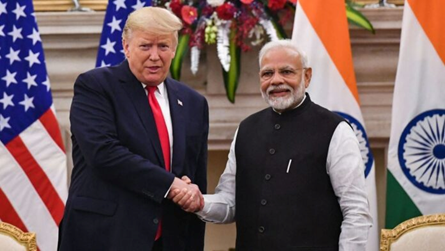
India and US agree on preferential market access for Indian goods in America: Piyush Goyal Govt Notifies Commodity Trading as Financial Service Under IFSCA Act, Paving way for Global Trading Operations at GIFT IFSC/ Vessel Decarbonisation subsidies fall Short-especially for re-fuels The agreement focuses on how goods move between inland production centres, warehouses and ports. Multimodal logistics parks can give shippers a place to consolidate cargo, store it and transfer it between road and rail where both modes are available. At a port-linked facility, exporters can group smaller consignments before dispatch, while importers can consolidate onward deliveries from the gateway. The partners have yet to identify park locations, transport links, handling capacities, investment commitments or construction schedules. Sandeep Kumar Reddy Dodla, CWC’s regional manager for Amaravati, and Praveen Adhithya C. V., chief executive officer of APMB, signed the agreement. Andhra Pradesh minister B. C. Janardhan Reddy, APMB Chairman DamacharlaSatyanarayana and CWC Executive Director B. Nirmal attended the signing. The agreement fits into Andhra Pradesh’s wider effort to link port development with industrial growth. The state’s Industrial Development Policy for 2024–29 c CWC and Andhra Pradesh Maritime Board sign pact for port-linked logistics parks/ Allcargo Global reports 270% QoQ EBITDA growth to ₹122 crore in Q2 FY27 MoPSW Secretary Vijay Kumar Reviews Infrastructure Development and Operational Efficiency at Chennai Port India moves to strengthen shipbuilding ecosystem through ‘India Shipbuilding Investment Conclave 2026’ India and Egypt to explore trade pact as Cairo talks focus on ports and manufacturing/ MSC plans direct container service from Mundra and Port Qasim to Saudi Red Sea ports India and US agree on preferential market access for Indian goods in America: Piyush Goyal Govt Notifies Commodity Trading as Financial Service Under IFSCA Act, Paving way for Global Trading Operations at GIFT IFSC/ Vessel Decarbonisation subsidies fall Short-especially for re-fuels The agreement focuses on how goods move between inland production centres, warehouses and ports. Multimodal logistics parks can give shippers a place to consolidate cargo, store it and transfer it between road and rail where both modes are available. At a port-linked facility, exporters can group smaller consignments before dispatch, while importers can consolidate onward deliveries from the gateway. The partners have yet to identify park locations, transport links, handling capacities, investment commitments or construction schedules. Sandeep Kumar Reddy Dodla, CWC’s regional manager for Amaravati, and Praveen Adhithya C. V., chief executive officer of APMB, signed the agreement. Andhra Pradesh minister B. C. Janardhan Reddy, APMB Chairman DamacharlaSatyanarayana and CWC Executive Director B. Nirmal attended the signing. The agreement fits into Andhra Pradesh’s wider effort to link port development with industrial growth. The state’s Industrial Development Policy for 2024–29 c CWC and Andhra Pradesh Maritime Board sign pact for port-linked logistics parks/ Allcargo Global reports 270% QoQ EBITDA growth to ₹122 crore in Q2 FY27 MoPSW Secretary Vijay Kumar Reviews Infrastructure Development and Operational Efficiency at Chennai Port India moves to strengthen shipbuilding ecosystem through ‘India Shipbuilding Investment Conclave 2026’ India and Egypt to explore trade pact as Cairo talks focus on ports and manufacturing/ MSC plans direct container service from Mundra and Port Qasim to Saudi Red Sea ports
DHL sees up to six months for supply chains to recover after Hormuz disruption
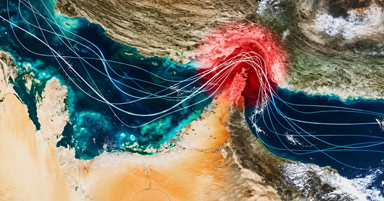
Global supply chains could take three to six months to normalise after shipping disruptions linked to the Iran conflict ease, according to Tobias Maier, chief executive of DHL Global Forwarding for the Middle East and Africa. Speaking in Dubai in November 2026, Maier identified India–Europe trade as one of the routes hardest hit by the disruption, which has raised freight costs, left containers out of position and increased congestion at alternative ports.

DHL sees up to six months for supply chains to recover after Hormuz disruption

Maier said container flows would take time to rebalance even if the Strait of Hormuz reopened. During the disruption, some Gulf-bound shipments were discharged in India or Sri Lanka. Moving that cargo onwards meant arranging additional shipping or inland transport, while extra handling and storage added to costs.DHL’s experience showed how recovery times varied by mode. Maier said it took around six weeks to clear the air freight backlog after the initial flight disruptions, while recovering containers stranded at ports in India, Sri Lanka, Kenya and Europe took several months. Some companies shifted urgent cargo to air, express or road services as ocean transit times lengthened.Maersk said use of its Saudi landbridge increased in October as disruption around Hormuz and changing conditions at KhorFakkan prompted shippers to seek alternative routes into Saudi Arabia and the wider Gulf. Its 12 November advisory listed dry cargo options via Jeddah and King Abdullah Port in Saudi Arabia, Salalah and Sohar in Oman, and Jebel Ali via a landbridge. The carrier also paused bookings on some overland routes, including from Jeddah to the United Arab Emirates (UAE), Oman and Qatar.DP World said it had moved more than one million twenty-foot equivalent units (TEUs) through alternative land corridors since the first week of March. The port operator established a customs-bonded link between ports outside the Strait of Hormuz and Jebel Ali, allowing containers to continue moving overland while direct maritime access was disrupted.DHL mobilised between 500 and 700 vehicles from the market in the first 48 hours of the conflict to keep customer shipments moving, Maier said. The company is exploring leases for around 500 trucks to strengthen cross-border freight links within the Gulf Cooperation Council (GCC) by the first quarter of 2027

The proposed leases sit alongside a wider DHL Group investment programme of more than €500 million in the Middle East between 2024 and 2030, focused on Saudi Arabia and the UAE. DHL Global Forwarding also signed a 20-year partnership with Etihad Rail in 2023 to use the UAE’s national rail network for domestic freight distribution.Maier said container flows would take time to rebalance even if the Strait of Hormuz reopened. During the disruption, some Gulf-bound shipments were discharged in India or Sri Lanka. Moving that cargo onwards meant arranging additional shipping or inland transport, while extra handling and storage added to costs.DHL’s experience showed how recovery times varied by mode. Maier said it took around six weeks to clear the air freight backlog after the initial flight disruptions, while recovering containers stranded at ports in India, Sri Lanka, Kenya and Europe took several months. Some companies shifted urgent cargo to air, express or road services as ocean transit times lengthened.Maersk said use of its Saudi landbridge increased in October as disruption around Hormuz and changing conditions at KhorFakkan prompted shippers to seek alternative routes into Saudi Arabia and the wider Gulf. Its 12 November advisory listed dry cargo options via Jeddah and King Abdullah Port in Saudi Arabia, Salalah and Sohar in Oman, and Jebel Ali via a landbridge. The carrier also paused bookings on some overland routes, including from Jeddah to the United Arab Emirates (UAE), Oman and Qatar.DP World said it had moved more than one million twenty-foot equivalent units (TEUs) through alternative land corridors since the first week of March. The port operator established a customs-bonded link between ports outside the Strait of Hormuz and Jebel Ali, allowing containers to continue moving overland while direct maritime access was disrupted.DHL mobilised between 500 and 700 vehicles from the market in the first 48 hours of the conflict to keep customer shipments moving, Maier said. The company is exploring leases for around 500 trucks to strengthen cross-border freight links within the Gulf Cooperation Council (GCC) by the first quarter of 2027

The proposed leases sit alongside a wider DHL Group investment programme of more than €500 million in the Middle East between 2024 and 2030, focused on Saudi Arabia and the UAE. DHL Global Forwarding also signed a 20-year partnership with Etihad Rail in 2023 to use the UAE’s national rail network for domestic freight distribution.

Search Sagar Sandesh