



Drone war pushes Russia to weaponise commercial shipping
Robert Brovdi,
commander of Ukraine’s Unmanned Systems Forces, said Operation MoLoChKa had hit
129 vessels in the Sea of Azov between July 6 and 28 and another 72 in the
Black Sea since July 15. The figures,
which exclude attacks attributed to Ukraine’s security service and other
military units, have not been independently verified. Brovdi said the campaign
targets the smaller tankers and support ships feeding larger export vessels and
supplying occupied Crimea, rather than sinking the export ships themselves. With commercial movements through the Sea of
Azov effectively suspended for the past fortnight, Russian military and
transport officials are discussing a significant escalation in ship protection.
Proposals reported by Bloomberg include fitting
grain carriers with armour, sandbags, anti-drone netting, mobile missile
launchers and mounts for heavy machine guns equipped with thermal or
night-vision sights.
Under one plan,
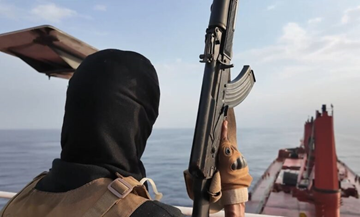
Russian soldiers carrying assault rifles would board ships at Azov ports, while
military teams temporarily installed heavier weapons. The personnel, guns and
ammunition would be removed after vessels passed through the Kerch Strait. Bulkers could also sail in convoys
protected by patrol boats, with traders and owners expected to meet the cost of
modifications and escorts. Kremlin spokesman Dmitry Peskov said Russia’s navy
could protect commercial ships, while acknowledging that placing weapons on
civilian vessels was prohibited under international law. The proposal follows a precedent already
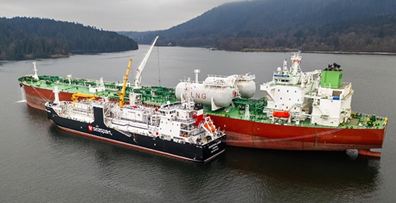
detected in the Baltic, where recent photographs showed heavy machine guns
mounted in sandbagged positions aboard the Gazprom-controlled LNG carrier
Marshal Vasilevskiy.
Arming bulk carriers would carry significant
consequences for crews, insurers and charterers. Ships displaying military
weapons or carrying soldiers risk being treated as combat-support assets,
potentially making them more rather than less attractive targets and
complicating war-risk cover, port entry and flag-state oversight.
Russia, meanwhile,
stepped up its own attacks on shipping over the past 24 hours. The Russian Ministry of Defence said its forces
struck at least two Ukrainian vessels on Tuesday. One was described as a bulk
carrier carrying military equipment in Black Sea waters south of Odesa, while
another was hit alongside infrastructure at Mykolaiv. Moscow said loading
facilities, fuel and lubricant tanks used to support Ukrainian forces were also
targeted. It did not identify the vessels or provide evidence supporting its
description of their cargoes, and the claims could not be independently
verified.
The reciprocal
campaign is now disrupting export logistics on both sides of the sea. Three Russian terminals—NZT and KSK at
Novorossiysk and ZTKT at Taman—have restricted grain deliveries by truck as
cargo diverted from the Sea of Azov overwhelms alternative gateways. The
facilities can handle more than 20m tonnes annually, compared with total
Russian seaborne grain exports of around 50m tonnes. Port Kavkaz has been closed since
restrictions were imposed on Azov traffic, while nighttime ship movements at
Novorossiysk have been banned because of drone risk. Analysts estimate Russia
could lose between 500,000 and 1.5m tonnes of grain exports each month if the
disruption continues.
Ukraine’s export
corridor is facing equally severe strain. Inbound vessel traffic has been
suspended since July 23, with repeated attacks on ships and Odesa-area port
infrastructure prompting operators including Maersk to halt services. The disruption has spread beyond grain.
Pivdennyi Mining and Processing Plant has started suspending extraction after
several shiploads of iron ore accumulated at ports and company warehouses. With
no space to store further production, the miner plans to keep extraction halted
until August. In related news, the
US Senate last night advanced the Lindsey O. Graham Sanctioning Russia and Iran
Act of 2026 by 86-12, targeting Russian officials, financial institutions,
shadow fleet shipping and major buyers of Russian energy. The bill allows
tariffs of up to 100% on leading purchasers and sanctions-evasion facilitators,
plus duties of up to 500% on direct US imports from Russia. Shipping impacts
could include reduced availability of older crude tonnage, cargo redirection
and longer voyages. However, measures are discretionary, waivers remain
possible and House action is delayed until after August 31.

Related News