WSC calls on governments to close battery cargo safety gap
The World Shipping Council (WSC) is calling on governments to address a gap in international dangerous goods rules that allows containers carrying thousands of lithium batteries to be transported without carriers being informed of the hazard.
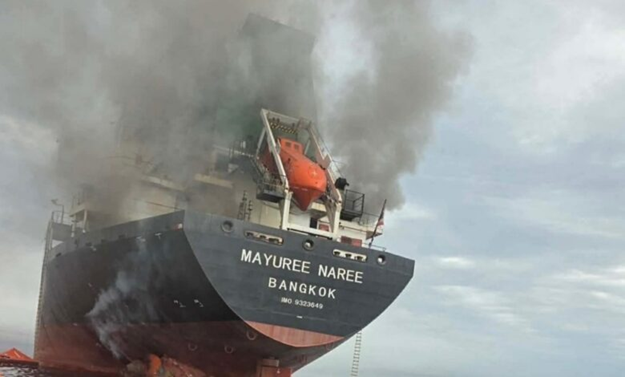
The call comes as battery transport grows rapidly and cargo fires remain a persistent risk at sea. Global lithium-ion battery deployment in 2025 was six times higher than in 2020, according to the International Energy Agency, with battery demand expected to double by 2030. Latest statistics by insurer Allianz show that a container ship fire occurs every 17 days.
Special Provision 188 of the International Maritime Dangerous Goods Code exempts smaller batteries from certain requirements when they meet specified testing, packaging and capacity criteria. However, there is no limit on how many exempt batteries can be consolidated in one container.
A container carrying around 4,200 laptops could therefore contain approximately 416 kWh of stored energy, equivalent to three or four electric vehicles, without requiring dangerous goods documentation or container placarding.
“Right now, a container can be packed with thousands of lithium batteries and still travel without being declared as dangerous goods,” said Joe Kramek, President and CEO of the World Shipping Council. “The SP188 exemption was intended to simplify the transport of individual devices with small batteries, not to make entire container loads invisible.”
Batteries are transported safely every day when they are properly declared and the risks are appropriately managed. The problem arises when carriers, crews, ports and emergency responders do not know the hazard is present.
Without that information, carriers cannot properly assess the risk, choose appropriate stowage, separate the container from other cargo or prepare an informed emergency response.
“We know what can happen when hazards are invisible,” Joe Kramek said. “Batteries shipped under the exemption have caused serious container fires, putting people, ports, ships and the marine environment at risk.”
“The current rules are not working as intended,” Joe Kramek said. “As battery shipments continue to grow, we need a better solution that makes these cargoes visible and allows the risks to be properly managed.”
Related News