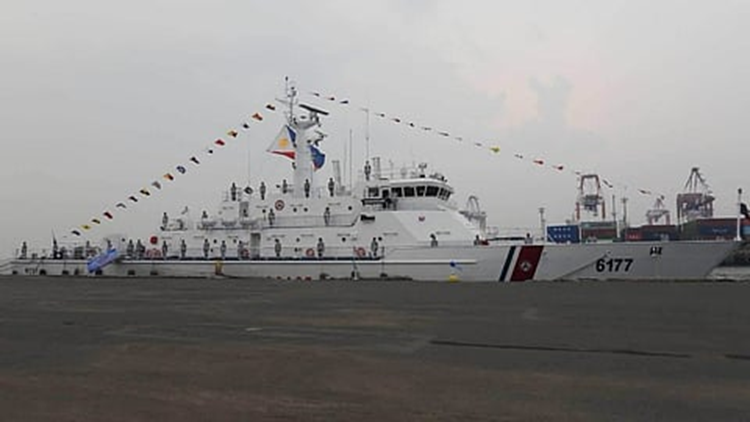
Philippine Coast Guard commissions ex-Taiwanese patrol vessel
The nonprofit We Protect Our Seas Foundation (WPSF), which had acquired
the vessel from Taiwan, announced the commissioning on Friday, October 2. The
foundation said it had obtained the fully refurbished vessel and transferred it
free of charge to the Philippine Government.
WPSF added that the vessel was for civilian maritime use only. Built in 2008 and named after a southern
Philippine province, Sarangani is approximately 61 metres long and 11.7
metres wide. WPS indicated her displacement as around 688 tons. The foundation said the vessel will support
sea patrols, search and rescue (SAR) missions, humanitarian assistance and
disaster relief (HADR), marine environmental protection, training, and other
civilian missions. In its September 21
handover announcement, WPSF said Coast Guard Commandant Admiral Ronnie Gil
Gavan had indicated that the vessel will be operated off the southern island of
Mindanao, supporting HADR, SAR, and environmental protection. The acquisition followed months of
coordination led by Dr Jeffrey Ordaniel, WPSF President and CEO. “Our objective was straightforward: if we
could bring a capable vessel to the Philippine Coast Guard without asking
Filipino taxpayers to foot the bill, we should find a way to make it happen,”
Ordaniel said. “It took months of work, but we reached an arrangement that
worked.” The foundation credited the
TCGA and the Taipei Economic and Cultural Office in the Philippines with
helping facilitate the transfer.
Taiwan’s Ocean Affairs Council Minister Kuan Bi-ling said the donation
terms prohibited using the vessel to enforce laws against Taiwanese fishing
boats, the Taipei Times reported. The WPSF said practical maritime ties
between the Philippines and Taiwan had grown since a 2013 episode concerning a
Taiwanese fishing boat. It said the two could expand cooperation in SAR, safety
at sea, fisheries, disaster response and marine conservation, in line with
Manila’s “one-China policy”. The 2013
incident involved Guang Da Xing No 28. Taiwan’s Ministry of Foreign
Affairs said Philippine Coast Guard personnel opened fire on the vessel,
killing a Taiwanese fisherman. Fisheries law enforcement talks between the two
sides followed the incident. Under a
2015 fisheries law enforcement cooperation agreement, the parties were to
refrain from using violence or excessive force and to notify one another in
advance of enforcement measures involving the other party’s fishing vessels in
areas where their exclusive economic zones overlap. The pact set a three-day
period for releasing detained vessels and crew once the required bond, security
or payment had been provided. The Philippine Coast Guard has been acquiring
secondhand vessels from overseas in recent years while also taking delivery of
newbuild platforms as part of the expansion of its capabilities. In August of this year, the service took
formal delivery of two ex-US Coast Guard Marine Protector-class patrol boats in Baltimore. They
were due in the Philippines in October, and their tasks will include maritime
surveillance, oil spill response, and SAR.
In 2025, the Philippine Red Cross transferred
a former US Navy prototype SWATH landing barge/ferry to the coast guard
for HADR support and casualty evacuation.
Related News