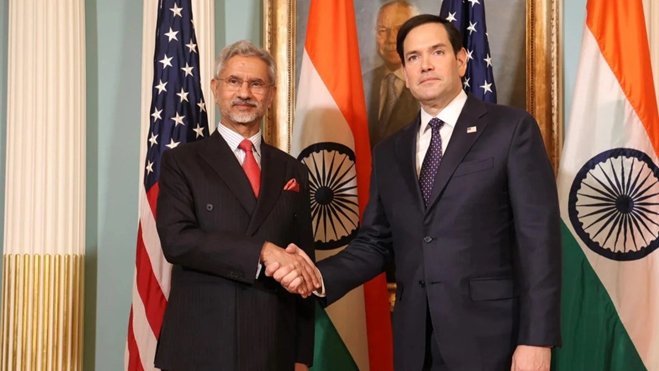
Marco Rubio’s India visit: Energy, trade, tech on table at meeting with Jaishankar today
US Secretary of State Marco
Rubio’s visit to India comes amid the tension in relations between the
two countries over visa
restrictions and tariff
threats.
His meeting
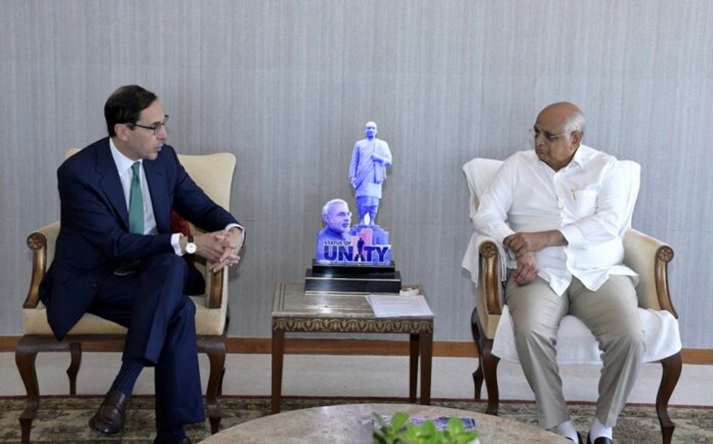
with External Affairs Minister S Jaishankar in Mumbai on Tuesday afternoon
is being seen as an attempt to repair ties. Indian officials said the two sides
are expected to discuss “energy, trade and investment, defence, critical and
emerging technologies”.
With Prime Minister Narendra Modi expected to travel
to the US for the G20 leaders summit in December, the meeting will also lay the
groundwork for his visit. The choice
of venue is being seen as an outreach to India’s business elite, which is based
in Mumbai. Returning to India after less than five months, Rubio will not be
going to Delhi. He will, instead, head to Jamnagar on Wednesday. According to the Ministry of External
Affairs (MEA), Rubio will land in Mumbai on Tuesday afternoon around 2.15 pm,
and will meet Jaishankar around 4 pm. He will also pay tribute to the 26/11
memorial at Taj Palace hotel and attend the US @250 event The visit
to Jamnagar, the seat of Reliance’s refinery, is significant since US billionaire Elon Musk, a
strong partner of US President Donald Trump’s administration, had
alleged that the launch of his satellite communications company, Starlink, was
being delayed in India due to “certain
oligarchs… to maintain their monopolistic chokehold“. “Is Ambani the real
boss of India,” Musk had said in a post on X. Sources said Rubio is expected to allay
the concerns of India’s business community on the proposed trade deal between
the two sides, and underline that there is enough space for both American and
Indian businesses to tap the potential of the Indian market. In this context, the energy needs of
India’s growing middle class is a case in point — where US energy supply can
supplement the Russian and Gulf supplies to meet the high-energy demands in the
Indian market, sources said.
The two sides are also expected to talk about the
technological partnership between the two countries, and the importance of the
resilience of supply chains — at a time when China is once again restricting
critical technologies. On October
16-18, China’s Ministry of Commerce and Ministry of Science and Technology
jointly published a draft proposal to add 40 technologies to its list of
prohibited or restricted export items. This included artificial intelligence,
solar manufacturing and biomedicine which targets cell and gene therapy
technology platforms. According to
sources, the two sides will also discuss efforts to increase defence sales and
co-production, mainly in the air and sea domains where the US has significant
technological advantages. “The two ministers will discuss the possibility of
technology transfer, which has been a major ask from the Indian side. Also, the
two sides are looking at how the Make-in-India programme can be incorporated
into India’s defence purchases from America,” sources said. The Rubio-Jaishankar bilateral is also
expected to discuss the issue of mobility restrictions that have cast some
shadow on the India-US relationship. The Indian side is expected to make the
point about how the Indian business and skilled professionals have contributed
to the US economy.
Rubio last visited Delhi in May this year, when he
attended the Quad Foreign Ministers’ meeting. This time, the Quad Foreign
Ministers’ meeting, which was being planned in Australia after the India leg,
has been cancelled.
Related News