Colombo Logistics Hub Project Ends as CMPort Agrees to Exit
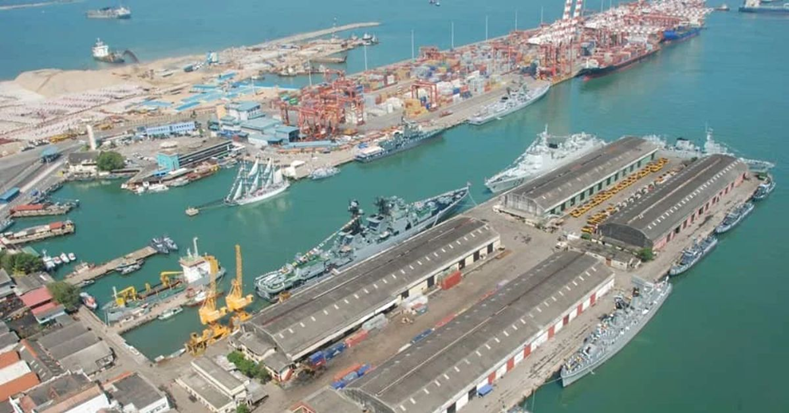
The Colombo logistics hub
project will not proceed under its existing arrangements after China Merchants
Port Holdings, its partners and the Sri Lanka Ports Authority agreed to
terminate the development. Announced
on 15 October 2026, the decision covers the South Asia Commercial and Logistics
Hub, a proposed commercial logistics complex within the Port of Colombo. The
termination arrangements cover the shareholders’ agreement,
build-operate-transfer agreement and site lease, alongside the orderly closure
of the project company. Changes in
external circumstances, the implementation environment and the timetable,
together with the parties’ commercial considerations, were cited as reasons for
ending the venture. The announcement does not establish a single political or
geopolitical cause for the decision.
Under the settlement, the Sri Lanka Ports Authority will pay US$21.905 million to
the project company, South Asia Commercial and Logistics Hub, within 30 days of
the settlement agreement. That
payment is to be distributed among the shareholders according to their
ownership interests. It is therefore a payment to the joint venture for
subsequent distribution, rather than a sum payable entirely to China Merchants. The settlement calculation starts with
US$26 million and deducts US$3.9 million in value-added tax and US$195,000 in
late-payment charges. Separately, the
project company held approximately US$7.85 million in distributable cash as at
31 December 2025. That balance is also covered by arrangements for distribution
to shareholders. These amounts must
be distinguished from the widely reported US$392 million project value. That
figure represented the proposed development’s investment cost; it was neither
the amount already spent nor the compensation agreed for termination. China Merchants participated through its
wholly owned subsidiary, Fortune Centre Group Limited, which held 70% of the
project company. Sri Lanka’s Access Engineering and the Sri Lanka Ports
Authority each held 15%. The
ownership structure combined an international port investor, a local
engineering company and the public authority responsible for the port. The
joint venture was established to finance, design, construct, develop, operate
and maintain the facility under a public-private partnership. Its responsibilities extended beyond
construction to the long-term management of the proposed logistics operation.
Terminating the agreements consequently ends both the development arrangements
and the operating framework envisaged for the consortium. The consortium launched the project in
April 2023, presenting it as a major addition to Colombo’s commercial logistics
infrastructure. At that stage, the development was promoted as South Asia’s
largest commercial logistics complex, with a planned investment of US$392
million. The proposed concession ran
for 50 years under a build-operate-transfer model. Its cancellation closes that
particular long-term development arrangement; it does not by itself determine
what infrastructure will eventually occupy the site. For Colombo’s logistics sector, the
immediate consequence is that the proposed complex will not be delivered by the
original consortium under the agreed structure. Commercially, this removes a planned source
of additional logistics infrastructure from the current development pipeline.
Businesses evaluating future capacity should therefore distinguish the
cancelled proposal from facilities already operating at the port. The financial settlement also provides a
route for closing the venture’s outstanding obligations. Repayment,
distribution of available funds and deregistration are separate steps from
identifying a replacement development.
The termination should not be interpreted as confirmation that China
Merchants is withdrawing from every Sri Lankan port investment. The agreements
being ended concern this logistics hub and its project company. Reporting on the cancellation indicates
that fresh proposals are expected for the logistics development. However, that
does not establish that a replacement investor has been selected, financing
secured or a new construction timetable agreed.
Any successor proposal would
need its own commercial structure, approvals and implementation commitments.
Until those are announced, the confirmed development is the termination and
settlement of the original venture, rather than the launch of a replacement
project.
Related News